This is a meticulously researched book, that puts the faces and names behind the statistics of the Native American genocide in the 19th century American West.
It is the stories of the many Native American tribes such as the Cheyenne, Sioux, Dakota, Apache, Ute, and many others, including their famous chiefs and heroes such as the wonderfully named Little Crow, Big Eagle, Mankato, Tall Bull, Lone Wolf, Black Kettle, White Horse, Dull Knife, Kicking Bird, Two Moon, White Bear, Little Wolf, Crazy Horse, Bald Head Tatum, Big Tree, Little Robe, Spotted Tail, Red Cloud, Wabasha, and Black Bear.
The book shows how the Native Americans were living, the organization of tribes, the names, the heroes, the folklores. And how the White Settlers gradually grab power, created unequal laws (such as Manifest Destiny), displaced the Natives from their lands, and ended up conducting a mass-scale genocide towards them when they resisted.
It is the tail end of an already brutal history since Christopher Columbus arrived in the continent in the 15th century, which have seen approximately 56 million Natives slaughtered in North America alone. It is told through tales such as the Little Crow’s war, the war with the Cheyenne, the Powder River invasion, Red Cloud’s war, the rise and fall of Donehogawa, the story of Cochise and the Apache guerrillas, the war to save the buffalo, the war for the Black Hills, the flight of the Nez Perces, and the Cheyenne exodus, among others. All of which are really tough to read, so very heart breaking, and have no happy ending.
“During that time the culture and civilization of the American Indian was destroyed,” the author Dee Brown remarks, “and out of that time came virtually all the great myths of the American West—tales of fur traders, mountain men, steamboat pilots, goldseekers, gamblers, gunmen, cavalrymen, cowboys, harlots, missionaries, schoolmarms, and homesteaders. Only occasionally was the voice of an Indian heard, and then more often than not it was recorded by the pen of a white man.”
This book, however, is different. First published in 1970, it revealed history from the Native Americans’ point of view, how their ancestors’ land that have been handed down from many generations were not shared but systematically robbed, which clearly shows that the story of the Thanksgiving is actually a blatant lie.
But of course the reality is much more complicated than just a bloodlust massacre. The book shows how some friendships between the Natives and White Settlers were genuinely formed, how several trades were established, and occasional friendly games were also held. But nevertheless, the good bonds were all broken at one point or another, and they largely became a tale of broken promises, backstabbing, cheating, framing, raids, famine, diseases, and segregation of villages, with the mass killing conducted gradually through complicated truces, bogus new regulations and abuse of power.
Dee Brown then continues, “The greatest concentration of recorded experience and observation came out of the thirty-year span between 1860 and 1890—the period covered by this book. It was an incredible era of violence, greed, audacity, sentimentality, undirected exuberance, and an almost reverential attitude toward the ideal of personal freedom for those who already had it.”
And the cherry on top? The United States of America has never officially admitted that they conducted a genocide. And almost nobody is demanding for any accountability.
4 million copies of this book have been sold since it was first published, and the book has been translated into 17 languages, as well as made into a movie with the same title. The book is so good of illustrating the genocide that it gives me a bitter aftertaste where I felt hopeless and powerless, towards a series of events that happened more than a century ago, over people that I did not even know existed.
Franz Kafka had an unhappy life, filled with anxiety and hidden rage. And it’s not hard to figure out where the source of his misery was coming from: his overbearing father.
Hermann Kafka was a narcissistic strict disciplinarian who raise his children using emotional abuse, double-standard, hypocritical actions, threats, explosive temperament and sarcastic comments, which, in his own words, made Franz feels “rejected, put down, oppressed.”
But it was the father’s disapproval of his engagement to Felice Bauer that became the last straw for Franz, and prompted him to express his feelings towards his father in the best way possible for him, through writing. Something that his father disprove of.
And in this letter Franz pour it all out, at the age of 36, all the emotions that have been building up for the past 3 decades.
It’s amazing how by looking into this meticulously written letter we can see the inner thought and feelings of Franz Kafka and what makes him human. And we can unintentionally see the biography of his life, the occurrences in his childhood that made a mark on him, and what helped to create his Kafkaesque world view.
“My writing was about you,” Franz wrote in the letter, “indeed I was only confiding my troubles to a book because I could not confide in you.”
The letter was never read by his father, however, where Franz gave the letter to his loving mother but she never revealed it to Hermann.
The Holocaust was one of the most horrific events ever occurred in history, where approximately 6 million Jews were killed by the Nazis. However, after the World War II ended, the Jewish genocide was actually regarded as only another casualties among other mounting World War II casualties and nothing more.
As the author Normal Finkelstein remarks, “Between the end of World War II and the late 1960s, only a handful of books and films touched on the subject. There was only one university course offering in the United States on the topic. When Hannah Arendt published Eichmann in Jerusalem in 1963, she could draw on only two scholarly studies in the English language – Gerald Reitlinger’s The Final Solution and Raul Hilberg’s The Destruction of the European Jews. Hilberg’s masterpiece itself just managed to see the light of day.”
It wasn’t until 1967 that it became a global horror, more famous than the genocides in China, Soviet Union, Cambodia, Bosnia, East Timor, Ottoman Empire, Zaire, or the slaughtering of the Native Americans even though some of these genocides had much more death toll. And it even had a special word assigned to it: the Holocaust. How can that possibly be? Enter the Holocaust Industry.
This is by far the most comprehensive book that I’ve read to really understand Zionism and the machine behind it, the Holocaust Industry. It shows the core idea behind their Hasbara propaganda, how they fund their movement, and how they can be the most powerful ethnic group in the United States that controls key areas in modern economy but yet can still acquired the victim status.
“The Holocaust dogma of eternal Gentile hatred has served both to justify the necessity of a Jewish state and to account for the hostility directed at Israel”, explains Finkelstein. “The Jewish state is the only safeguard against the next (inevitable) outbreak of homicidal anti-Semitism; conversely, homicidal anti-Semitism is behind every attack or even defensive maneuver against the Jewish state.”
We can see this dogma reflected in the very creation of the Holocaust Industry immediately after the 1967 Arab-Israeli war, when Israel badly needed a good PR. That year was when Israel staged a war against its neighbouring countries and captured the Golan Heights from Syria, Gaza and the Sinai Peninsula from Egypt, and the West Bank (including East Jerusalem) from Jordan. And they needed a justification and/or excuse for these violations of international law. As Finkelstein elaborates, “This dogma has also conferred total license on Israel: Intent as the Gentiles always are on murdering Jews, Jews have every right to protect themselves, however they see fit. Whatever expedient Jews might resort to, even aggression and torture, constitutes legitimate self-defense.”
The book then goes into a great length of providing meticulous evidence at seemingly every other paragraphs, as well as citing multiple names and their works, over the development of this Holocaust Industry. From obscurity, to gaining momentum after the 1973 war, to a complete dominance in the US and in the world stage.
It also addresses some of the hoaxes created by the Holocaust Industry to enhance the illusion of their suffering and downplaying their criminal acts. Hoaxes such as The Painted Bird, a book written by Polish émigré Jerzy Kosinski that was supposedly about Kosinski’s autobiographical account of his time as a solitary child in rural Poland during World War II, which described the sadistic sexual tortures and insults perpetrated by Polish peasants towards the Jews.
However, in reality Kosinski lived with his parents throughout the war and he made up almost all the horrific episodes that he wrote, and the Polish peasants even harbored the Kosinski family although they were fully aware that they are Jewish and they themselves will get into trouble if caught. Nevertheless, “The Painted Bird became a basic Holocaust text. It was a best-seller and award-winner, translated into numerous languages, and required reading in high school and college classes.”
Another example of fabricated Holocaust memoir is Fragments by Binjamin Wilkomirski, with a depiction of a Nazi concentration camp filled with sadistic guards and more crucially a depiction of life after the Holocaust, with all the trauma, the Holocaust deniers, and anti-Semitism still very much haunting little Benjamin. And just like Painted Bird, “Fragments was translated into a dozen languages and won the Jewish National Book Award, the Jewish Quarterly Prize, and the Prix de Mémoire de la Shoah. Star of documentaries, keynoter at Holocaust conferences and seminars, fund-raiser for the United States Holocaust Memorial Museum, Wilkomirski quickly became a Holocaust poster boy.” However, historians such as Raul Hilberg and an exposé by the New Yorker show that the book was indeed a fraud.
And these two are examples of first-hand sources. The secondary sources within the Holocaust library are even more filled with hoaxes and false propaganda, sources that are still cited widely till this day. One notorious false information is on the stance of Jerusalem’s mufti. As Finkelstein explains, “Although the Mufti of Jerusalem didn’t play “any significant part in the Holocaust,” Novick reports, the four-volume Encyclopedia of the Holocaust (edited by Israel Gutman) gave him a “starring role.” The Mufti also gets top billing in Yad Vashem: “The visitor is left to conclude,” Tom Segev writes, “that there is much in common between the Nazis’ plans to destroy the Jews and the Arabs’ enmity to Israel.””
The Holocaust Industry also altered the facts in history. For example, where the Jews became the first political victims of the Nazis instead of the real first victims the communists, and the first genocidal victims weren’t the handicapped but the Jews. And the half million gypsies that were also slaughtered by the Nazis? They heavily downplay the gypsies’ suffering: “Multiple motives lurked behind the museum’s marginalizing of the Gypsy genocide. First: one simply couldn’t compare the loss of Gypsy and Jewish life. Ridiculing the call for Gypsy representation on the US Holocaust Memorial Council as “cockamamie,” executive director Rabbi Seymour Siegel doubted whether Gypsies even “existed” as a people: “There should be some recognition or acknowledgment of the gypsy people . . . if there is such a thing.””
Why do they downplayed the gypsies genocide? Enter the second and third points: “Second: acknowledging the Gypsy genocide meant the loss of an exclusive Jewish franchise over The Holocaust, with a commensurate loss of Jewish “moral capital.” Third: if the Nazis persecuted Gypsies and Jews alike, the dogma that The Holocaust marked the climax of a millennial Gentile hatred of Jews was clearly untenable. Likewise, if Gentile envy spurred the Jewish genocide, did envy also spur the Gypsy genocide? In the museum’s permanent exhibition, non-Jewish victims of Nazism receive only token recognition.”
And what did they do with these sole victimhood propaganda? They use it for blackmail in order to get compensations. At the end of World War II there were around 100,000 Holocaust survivors, which consist of those who suffered the trauma of the Jewish ghettos, the concentration camps, and the slave labour camps. However, in practice many Jews who spent the war elsewhere also claimed to be a camp survivor, simply because the postwar German government provided compensation to the Holocaust survivors. And so a lot of Jews fabricated their past to meet the eligibility requirement.
The label Holocaust survivor also became a distinctive special honour, which through time spread into a family honour, like one contributor to a Holocaust web site reportedly “although he spent the war in Tel Aviv, he was a Holocaust survivor because his grandmother died in Auschwitz.” Naturally, therefore, the number of Holocaust survivors became inflated from 100,000 to nearly a million people.
This came in handy when Germany reached a deal with Jewish institutions and signed indemnification agreements and paid out to date around $60 billion. Finkelstein compared this with American compensation towards the Vietnamese, where “Compare first the American record. Some 4–5 million men, women and children died as a result of the US wars in Indochina. After the American withdrawal, a historian recalls, Vietnam desperately needed aid. “In the South, 9,000 out of 15,000 hamlets, 25 million acres of farmland, 12 million acres of forest were destroyed, and 1.5 million farm animals had been killed; there were an estimated 200,000 prostitutes, 879,000 orphans, 181,000 disabled people, and 1 million widows; all six of the industrial cities in the North had been badly damaged, as were provincial and district towns, and 4,000 out of 5,800 agricultural communes.” Refusing, however, to pay any reparations, President Carter explained that “the destruction was mutual.””
And here’s the kicker: “Whatever benefits (if any) the actual Jewish victims received were indirect or incidental. Large sums were circuitously channeled to Jewish communities in the Arab world [i.e. Israel] and facilitated Jewish emigration from Eastern Europe. They also subsidized cultural undertakings such as Holocaust museums and university chairs in Holocaust studies, as well as a Yad Vashem showboat pensioning “righteous Gentiles.””
The Holocaust Industry also went after the Swiss Banks and German firms. As Finkelstein remarks, “In a widely reported story, an Israeli journalist cited a document – misread, as it turned out – proving that Swiss banks still held Holocaust-era Jewish accounts worth billions of dollars.” Specifically, “The Holocaust industry first alleged that Swiss banks had systematically denied legitimate heirs of Holocaust victims access to dormant accounts worth between $7 billion and $20 billion.” Chapter 3 of the book then covers their attempt to extract as much money as possible from the Swiss, using lies and deceptions, using political pressure and of course using the Holocaust victim card and use this against their portrayal of a “greedy Swiss Bankers.”
The Swiss eventually settled for $1.25 billion, which covers three classes: claimants to dormant Swiss accounts, refugees denied Swiss asylum, and victims of slave labor which Swiss benefited from. However, once the Swiss signed away the money, again, more than a year later there was still no distribution plan. In fact, “as of December 1999, less than half of the $200 million “Special Fund for Needy Victims of the Holocaust” established in February 1997 had been distributed to actual victims.” And instead, after paying the lawyers, the majority of the funds were sent into the coffers of “worthy” Jewish organisations.
Even Finkelstein’s own mother – who is a real Holocaust survivor alongside his father – only received peanuts compared with others who are fake Holocaust survivors but get more money and even pensions.
Finkelstein then adds, “The Jewish Claims Conference’s official Guide to Compensation and Restitution for Holocaust Survivors lists scores of organisational affiliates. A vast, well-heeled bureaucracy has sprung up. Insurance companies, banks, art museums, private industry, tenants and farmers in nearly every European country are under the Holocaust industry gun. But the “needy Holocaust victims” in whose name the Holocaust industry acts complain that it is “just perpetuating the expropriation.” Many have filed suit against the Claims Conference. The Holocaust may yet turn out to be the “greatest robbery in the history of mankind.””
Today in the US there is an Annual Days of Remembrance of the Holocaust, while all 50 states are sponsoring commemorations and often in state legislative chambers. Moreover, the Association of Holocaust Organizations have over 100 Holocaust institutions, 7 major Holocaust museums, with the centerpiece of this is the Holocaust Memorial Museum in Washington. Pretty bizarre if considering that they are commemorating an incident at another part of the world, and they don’t even have this much museums and organisations for the Native Americans.
As Finkelstein commented, “why we even have a federally mandated and funded Holocaust museum in the nation’s capitol. Its presence on the Washington Mall is particularly incongruous in the absence of a museum commemorating crimes in the course of American history. Imagine the wailing accusations of hypocrisy here were Germany to build a national museum in Berlin to commemorate not the Nazi genocide but American slavery or the extermination of the Native Americans.”
So, what’s the point of all of this? Finkelstein argues that “The Holocaust museum signals the Zionist lesson that Israel was the “appropriate answer to Nazism” with the closing scenes of Jewish survivors struggling to enter Palestine.”
And as we can all see, the Holocaust victim card, that was first created after the Arab-Israeli war 1967, has proven to be the perfect weapon for deflecting criticism of Israel. Today, we can hear almost repeatedly that Israel have the right to defend itself, any criticism towards Israel is quickly labelled as anti-Semitic, and the horrifying image of the Holocaust through movies, books, diaries, museums, etc constantly remind us that the attacks on Jews should never happen again. Even though they are now the ones who are committing the crimes.
This is a small book filled with Oscar Wilde’s amusing one liners. It is probably what it would look like if Wilde is still alive today and have a Twitter account. It’s smart, it’s witty, sometimes bizarre, but overall wise and covers an impressively wide range of observations on human behaviour. I expect nothing less from an Oscar Wilde book.
Gregor Samsa is a conformist man. He works tirelessly, never take a day off sick, and live his life like a clockwork down to the seconds. He is also the bread winner of his family, that consist of a retired father, a house wife mother, and a teenager little sister (Grete), a family that have grown to take him for granted.
But then one strange day he wakes up in a horror, when realizing that he has been transformed into a monstrous vermin. And that’s when everything is starting to fall apart.
This short story shows the nature of Gregor as a responsible but submissive man, where the first thing in his mind after the transformation is how he would still go to the office, his fear over how his ungrateful employer can easily replace him, and how the family can possibly survive now with him unable to work and eventually lost his job.
It also shows the characters of the other family members and how they react to the disaster, with the father projecting anger, the mother helplessness, and the sister showing compassion and care at first but later when she got overwhelmed she turned into the one who wanted to get rid of him. And true to his submissive nature, even in great pain Gregor still complies with the family’s unspoken wish for him to disappear, and he starved himself to death.
So many interpretations and philosophy can be extracted from this story, since it is very much relatable to the real world. It is a great example of how an ordinary family responds to a disaster, where following Gregor’s transformation the family suddenly need to generate other means to get an income. Something that, as it turns out, can be arranged after all without placing the burden of the family solely on Gregor’s shoulders, now with his father going back to work and they can rent out a room in the house for guests.
Of course, over the decades there have been numerous interpretations and lessons coming out of it, which is a testament to Kafka’s brilliance. Some observers argued that “the metamorphosis” is more of a Grete’s story rather than of Gregor’s, where throughout this ordeal the little sister is indeed transformed from a little girl into a young woman that takes over care and responsibilities.
Moreover, some see Gregor’s transformation into a monstrous vermin to be more of a metaphor of his deprived existence, with his presence in the world is reduced to merely becoming a corporate robot in his professional life and a money-making machine for his family. Meanwhile, other observers suspect that Gregor’s transformation is nothing more than a case of leprosy, which would fit into the narrative of the story and the people’s reactions towards Gregor, especially the 3 guests at the house.
Whatever the real intention behind the story is, it will forever be a mystery and remains open for interpretation because Kafka never revealed it. The book was also never meant to be published.
And true to Kafka’s style of writing, the story does not really have a conclusive ending, and instead it just ends with a bitter after taste where the family can easily move on without Gregor after they’ve figured out how to live life without his money and now without the burden of a vermin living in their house. Now that’s Kafkaesque.
This is a poetic book about life as a Palestinian, in an autobiographical prose written by its most celebrated poet, Mahmoud Darwish.
In the book, Darwish tells a story about being a citizen without a country after the creation of the state of Israel in 1948, the loss of a family land in al-Birwa in 1949 after it was confiscated by the settlers, and what it is like to be a refugee in his own land and to be a second class Arab Israeli living among the occupiers.
It is a very vivid description of what had happened from an ordinary person’s vantage point, struggles that are as relevant today as in 1949 or when the book was written in 1973.
Through this book and his many other writings Darwish’s story then becomes the Palestinians’ story, a representative of the many voices that are often silenced. His stuggles reflect their struggles. His pain is their pain. And in this autobiographical book he poured it all out. The “Journal of an ordinary grief” chapter in particular shows how the harsh daily lives look like for Arab Israeli living in the apartheid state.
Here are some insights from the book, in Darwish’s own words:
We do not long for a wasteland, but for a paradise. We long to practice our humanity in a place of our own.
The difference between a lost paradise in its absolute sense and the lost paradise in its Palestinian meaning is that the former understanding would keep the condition of longing, and psychological and rightful belonging, out of the sphere of the conflict.
As long as the struggle continues, the paradise is not lost but remains occupied and subject to being regained.
Some years later, I searched for my sweetheart but she was getting married to another man. I searched for work but poverty was my lot. And I searched for my people but found a prison cell and a rude officer. Acre was the last border to the world, and the beginning of effort and failure. Its wall was eroding with time.
You weren’t able to hold back your anger in exile when your classmates reminded you that you were Palestinian and had no right to excel. Those insults were the first clues to an awareness that would take hold of you in a few years, when you realized that your situation was not simply a matter of asking for equal rights, or a question of getting hold of more bread in a crisis.
Twenty years later after many Arab cities had fallen, the thoughts I was sharing in Hebrew with a friend at a restaurant did not please a man sitting there, and he set to defending Israeli oppression with what he considered an irrefutable argument. He said you don’t know these Arabs, and if you knew them, you wouldn’t speak about justice in this manner. I asked him to tell me more. He knit his brow and said, “Have you heard of a village called al-Birwa?” “No,” I answered. “Where is it?” “You won’t find it on this earth,” he said. “We blew it up, raked the stones out of its earth, then plowed it until it disappeared under the trees.” “To cover up the crime?” I asked. He corrected me, protesting, “No, it was to cover up its crime, that damned place.” “And what was its crime?” I asked. “It resisted us,” he answered. “They fought back, costing us many casualties, and we had to occupy it twice. The first time we were eating dinner, and the tea was hot. The villagers surprised us and took it back. How could we accept such an insult? You don’t know the Arabs, and now I’m telling you.” I told him I was Arab, and that it was my village.
This is the way they are. They commit the crime, deny it, and when the victim confronts them they sidestep the question by talking of peace.
I gave you a land on which you had not labored, and cities which you had not built, and you have lived in them; you are eating of vineyards and olive groves which you did not plant.
They called us “present-absentees” so we would have no legal right to anything. At the same time we found out that thousands of these returnees were shoved into trucks as soon they were arrested and immediately dumped on the border like damaged merchandise. We knew that hundreds were shot dead so that others would stop thinking of returning. We also knew that my aunt’s husband, who tried to steal in from Lebanon, had not yet arrived.
Villages were closed off by a set of military regulations whose violation would cost you a prison sentence and a fine. Scores of villages were destroyed because of their fertile land, or as punishment for their resistance to the sword emerging from the Torah. Their inhabitants were forbidden to go near them, no matter what changes may have occurred in the security fence of Israel. Because of this, it was impossible to visit our village.
On the road from Deir el-Asad to Acre stands al-Birwa still on the same rise. I did not find it by means of the government list that gave it another name. What led me to it was the huge carob tree where, many years ago, I started the search for my mother and the pieces of my heart that were saturated with rain and longing.
A place is not only a geographical area; it’s also a state of mind. And trees are not just trees; they are the ribs of childhood.
On searching for his childhood home: I continued on the path of stones and longing, searching for the boy I had left here. I didn’t find the mulberry tree he climbed or the courtyard where he used to lose himself. Nothing!
In why the Darwish family exiled themselves to Lebanon during the Nakba: My father said they didn’t fully grasp what was happening. It was going to be a quick battle with guaranteed results, they had imagined. The departure from the villages was a way of saving the body from death, with no corresponding awareness of what leaving the land meant.
The prevailing impression – or ruse if you wish – was that the exit would be temporary, for a few days only. So, why should children, women, and old people die for nothing if the departure was going to be temporary, with victory and return guaranteed? The Israelis used the exit as an excuse to claim we had no attachment to our homeland and were therefore not worthy of one if we could so easily leave it behind. But they deceive only themselves when they believe their own claims, for they supplemented the prevailing rumor that the exit was temporary with guns and daggers that gave the Arabs a strong incentive to leave.
Emptying Palestine of its Arab inhabitants was not an emergency measure imposed by circumstances, but part of an ongoing Zionist strategy before the establishment of the state, during the [1948] War, and after. They carried out this strategy violently with their weapons, and justified it on religious grounds from the example of Joshua Son of Nun and the text “The Day of the Lord is a day of terror.”
And in all the villages they occupied afterward they gathered the inhabitants in the main square and made them stand in the sun for several hours. Then they chose the handsomest young men and shot them dead in front of the other villagers in order to force them to leave, in order to let news of the massacre spread to villages not yet occupied, and to purge their repressed historical resentment.
They also found legal justification in the claim that the Arabs sold their land. Sadly, it is possible to find certain Arab groups that have believed this Israeli lie while making no effort to learn that until 1948 the Jews owned no more than six percent of the total land of Palestine.
He who left for Lebanon and returned in a year or two is not a citizen, but he who came from Warsaw after two thousand years does have rights and a homeland.
Late one night a police captain struck the door of our adobe brick house with his truncheon. He woke up the family – grandfather, grandmother, my parents, and four children – all crowded into a single room that served as sitting room, bedroom, and kitchen. The captain directed a question at my grandfather, “Did your children return from Lebanon?” Grandfather confessed to the “crime,” and the captain hauled the father and uncle away under arrest on the charge of stealing back into their own country.
The guns attacked her home, and she grabbed something she thought was her baby and rushed into the nearest boat in terror. While on the sea to Acre she discovered that the baby was only a pillow, and from that day she lost her mind. How many infants became pillows? And how many pillows were taken for infants? So, what is a homeland? The homeland of a mother is her child, and the homeland of a child is the mother.
It would not be an exaggeration to say that Israeli Zionist behavior toward the original inhabitants of Palestine is similar to the practices applied by the Nazis against the Jews themselves.
You ask for a passport, but you discover you are not a citizen because your father or one of your relatives had fled with you during the Palestine War. You were a child, and you discover that any Arab who had left his country during that period and had stolen back in had lost his right to citizenship.
You obtain a certificate that proves you exist, and you do eventually obtain a laissez-passer, but the question is, “How are you going to pass?” You are in Haifa, and the airport is near Tel Aviv. You ask the police for a permit to pass from Haifa to Tel Aviv and they refuse. The lawyer intervenes, and some members of the Knesset, but the police still refuse. You think you will be more clever and devious than they are, and decide to leave by way of the sea at the Port of Haifa on the understanding that you have the right to pass to the port. You rejoice at your cleverness. You buy a ticket, and you pass through passport control, the health department, and customs without any hindrance. Then, when you are close to the ship, they arrest you and take you to court. This time, you insist that the law is on your side. But in court you discover that the Port of Haifa is part of the State of Israel, and not part of the city, and they remind you that you are forbidden to be in any part of Israel outside Haifa, and the port according to the law is outside the city. You are found guilty.
Israel makes a great show of sensitivity to any practice that it sees as oppressive to Jews anywhere in the world, but such practices quickly become legitimate and humane when practiced against the Arabs. And what was considered savagery when directed against Jews quickly changes into a Jewish national duty when undertaken with the “pure” Jewish arms against the Arabs.
The days have taught you not to trust happiness because it hurts when it deceives.
You tell them that the mere sight of water does not satisfy the thirsty man but bloodies him.
The homeland is at its most beautiful when it is on the other side of the barbed wire.
And Gaza is not the most polished of cities, or the largest. But she is equivalent to the history of a nation, because she is the most repulsive among us in the eyes of the enemy – the poorest, the most desperate, and the most ferocious. Because she is a nightmare. Because she is oranges that explode, children without a childhood, aged men without an old age, and women without desire. Because she is all that, she is the most beautiful among us, the purest, the richest, and most worthy of love.
I did not say goodbye to anyone or anything. The butt of a rifle rolled me down from Mount Carmel to the port of Haifa. I was clinging to God’s waste and crying at the top of my voice until I lost my voice and my mind. But the world promised me some alms in exchange for signing a truce with myself (because a truce with the killer cannot be accomplished without a truce with oneself first). And the world did give alms: it gave flour, clothes, and many tents for me and my children, who were not born in exchange for homeland and peace. When I felt cold in my exile, newspapers of world public opinion protected me from the rains and from shivering with cold.
History is not a judge. History is a functionary. What would the Red Indians have said if they had defeated their conquerors? Those who boast of being cultured and civilized are most often the killers.
Consider this threesome. The first annihilated a people in the past. They have detonated the great sign of their civilization – the atom bomb – in the streets of the world, and are now annihilating a people and a land in Southeast Asia. They are demanding that I exit from the human race and the globe because I am a terrorist. As for the second, it is best not to remind them of their past. They have burned tens of millions of people in the name of culture and civilization. And now, the killer and the victim embrace and give birth to a new offspring, who is the third. What can come out of the marriage of terrorist with terrorist except terrorism? The third, armed to the hilt with the Hebrew Bible and the sword, came and uprooted me from my hills and valleys and rolled me out of civilization down into the depths. This threesome is now demanding I exit from the earth because I am a terrorist.
This is how the world goes to sleep, and in the same way it wakes up. It is armed with weapons to the hilt, and we are armed to the hilt with shackles. The powerful are civilized, and the weak are savage.
In saving yourself from being a displaced refugee, you forced the other side to the point in the circle from which you started. Seen this way the equation no longer holds. When you find yourself canceling me out of my being, and when I insist on keeping it, the relationship between you and me becomes one of conflict. Not because I object to your being or to the possibility of a shared existence, but because I object to the negation of my being that arises from the way you carry on with yours.
Now, I cannot begin to imagine what it feels like to be a Palestinian. But as an ethnic cleansing is currently taking place in Gaza I too feel heart broken, feel defeated by the rigged international system, and if I’m doing anything normal or happy in my life I feel guilty considering people in Gaza are immensely suffering. But reading this book has somehow mend the feeling of powerless and the frustration from the inability to help.
Darwish has this aura in his writing that gives hope to the otherwise awful occupation. It does not make it acceptable, but bearable. It does not solve any problem, but put things in their right perspectives that show what we’re really facing. It provides a clear line between right and wrong despite all the propaganda and brainwashing that are trying to justify the crimes.
And his glittering words send a sense of strength and calmness that I’ve never encountered before, words that come from contained deep emotions that take a new form in weighted poetry. Something that we will immediately feel once we read it.
Now I get it why he is considered as one of the biggest voices of the Palestinians.
The Maasai tribe in Kenya have a tradition of spitting at a new born baby, for good luck. What a way to start a life, eh? Hujambo beautiful people, welcome to my annual list of 100 things that I’ve learned and did over the course of a year. And what a year 2023 has been for me! More on this later at the end. But first, my yearly facts.
1 dog year is not equal to 7 human years, but instead they mature very rapidly at first and then slow down: 1 dog year = 15 year-old human, 2 dog year = 24 year-old human, and the afterwards each 1 year = around 4-6 human years. The same calculation is also applicable for cats.
There is a type of fish that communicates with each other by farting. The guilty party is herring fish, and this fact was discovered 20 years ago in 2003, but I’ve just “herring” about it now. No, not funny? Ok let’s move on. Apparently, National Geographic explains that when the herring fish pass gas, the bubbles will make a high-frequency sound only audible to other herrings. The fish also use the noise to form “protective shoals” at night time to help them stay safe. I know what you’re thinking, can humans learn to utilize this skill?
During the Middle Ages, divorce was a taboo topic. So people figured out a way to resolve marital disputes: divorce by combat. Yeah sounds a bit Game of Throne-y. The practice originated from Medieval German, it became a legal way of ending marriages, and it is exactly like it sounds: if a couple couldn’t resolve an issue and have exhausted every other methods, a duel will be arranged. Both wear tight bodysuits, the man got a short thick stick and the woman was given a sack with stones, and to make the fight “fair” the husband was put in a hole, while the woman could move freely. The fight was monitored by judges who will chose the winner. But here’s the catch: the loser had to die. If the woman won, the man will be publicly executed. If the man won, the woman will be buried alive. Yikes.
Remember Joseph Stalin in Sri Lanka from last year? Well in Namibia there’s an Adolf Hitler. And apparently he’s a good guy, an anti-apartheid activist. And in November 2020 he won a local election in northern Namibia with 85% of the vote. Popular, popular guy. The best part of the election was, in his winning speech he promised not to pursue world domination. LOL, I like him.
The tooth fairy is the go-to guy (a guy?) for teeth-for-money exchange in many countries, including in the US, some European countries, and Australia. But in some parts or the world, that role is actually played by a small mouse. In France, the mouse is called La Bonne Petite Souris (the good little mouse) and it was based on a story from the 1600s where a fairy turns into a mouse to fight against an evil king. The mouse eventually hides under the king’s pillow and knocks some of his teeth out.
In Spain, the mouse is named El Ratoncito Perez (Perez the mouse), and he came from a children story written in 1877 by Fernan Caballero that had a mouse married to an ant but not yet collecting teeth. This changed in 1894 when Luis Coloma wrote a children’s story for king Alfonso XIII when he lost his first tooth at the age of 8. Coloma used Perez the mouse character but changed his story to be a mouse that live in a cookie box in an alley in Madrid, and at nights he would go to children’s bedrooms, retrieve the lost teeth under the pillows, and exchange them with coins. This tradition then spread to Spanish-speaking countries.
Gravity is not the same everywhere on Earth, but instead it is slightly stronger in places that have more mass underground compared with places with less mass. In fact, 9.8 m/s^2 (meters/second squared) is just the global average, while for example it is 9.7803 m/s^2 at the equator, 9.8322 m/s^2 at the poles. The lowest gravitational acceleration is 9.7639 m/s^2 at mount Nevado Huascaran in Peru, while the highest is at the surface of the Arctic Ocean at 9.8337 m/s^2. This heatmap shows where in the world that gravity is strong or weak, with Indonesia looks suspiciously very red (this actually scientifically explains why it’s a bit difficult for my mates to get up from bed in the morning, and maybe, juuust maybe, I’m not slightly over weight after all but I just happen to live in a high gravity area).
Did you know that us humans have a snooze/sleep button? Yeah, I was also today years old when I discovered this. It’s called anmian, and they are located a little under the lobe of each ear and behind the bony-feeling protuberance (you know what, just google image it). If you lightly press both acupuncture points together, you can go to sleep quickly and peacefully. You’re welcome.
The name Amazon means A (without) Mezos (breast). The word is derived from an ancient tribe, an all women warrior (sure, that one in Wonder Woman movie), who all removed their right breast so that they can use bow and arrow better. Now, the reason why the biggest river in the world is called the Amazon is because during the conquest of the Spanish explorer, they encountered a local tribe that fights, according to the Spanish, like the ancient tribe and they gave the local tribe the Amazon nickname. Well the name stuck. And as we all know, the giant tech company is also named after the river. So, in other words, let’s not get distracted from the main point here: the Amazon river and the Amazon company literally means “no tiddies.”
So, have we found where Atlantis is? We need to revisit the Green Sahara period from 100 things 2022 no 44-47 for the background context, where the Sahara were once a green lush jungle area like today’s Amazon. Done? Ok let’s continue. So, there’s a spot called the Richat Structure, it is located in the North African country Mauritania in their part of Western Sahara desert, which also commonly known as the eye of the Sahara. The shape and the location of the Richat Structure happens to match more than a dozen similarities with a place that Plato described as the lost ancient capital city of Atlantis. First, its shape is said to be made of concentric circles, 3 of water and 2 of land, which is similar with the Richat Structure. It is also has an opening to the sea, which if we see the Richat Structure from the satellite imagery it is clear that there used to be a water gate near the concentric circle.
Moreover, Atlantis was said to have mountains to the North, and at the North of Richat Structure? There’s the Atlas mountain. Atlas, by the way was the name of the very first king of Atlantis. Looks very convincing doesn’t it? If this is true, then we got the speculation wrong all this time, Atlantis is not buried under water but under the sands. And there’s more. According to Ben van Kerkwyk, Atlantis is not a single city per se but it was more of a capital city of an empire
The founders of Mercedes Benz were Karl Benz and Gottlieb Daimler, who founded the company in 1886. So, where did the name Mercedes come from? About 15 years later came a wealthy Austrian industrialist named Emil Jellinek, a racing enthusiast that requested Daimler and his chief engineer at the time, Wilhelm Maybach, for a racing engine to compete in this race in Nice. So they made him the engine and the car, and he won the race. Now, the pre-requisite for that deal was the car should be named after the Austrian’s daughter, which happened to be Mercedes. And the rest was history.
You know that we often hear that several hundred years ago life expectancy were like 40 or 50, and then thanks to modern medicine now life expectancy rises to 70-80? As it turns out, the cavemen had life expectancy of 80. So what happened in between cave men and us? Modernization led to degradation of our health, because we started to live in cities and towns where hygiene and sanitation was so poor and diseases crept up. Hence the low life expectancy back in the days. Modern medicine did save the day and life expectancy rose again for the baby boomers generations. But don’t get too happy though, today life expectancy drops again due to unnatural living condition from the likes of the chemicals we use at our food, the pollution, sugar consumption, and as menial as wireless or lightbulb exposure.
Vultures are famed for eating corpse or rotting flesh that are full of germs and bacteria. But have you ever wondered why they don’t get sick from eating them? Michael Roggenbuck at the University of Copenhagen discovered after examining the gut of 50 black vultures and turkey vultures that they have 2 very specific types of bacteria: 1. Clostridium 2. Fusobacteria. The first is a bacteria that causes tetanus, gangrene, and botulism toxin (that causes muscle paralysis, difficulty breathing, attacks the nerves, and can even cause death) while the second can cause blood infections.
So how do they survive these 2 killer bacteria? Firstly, they have an incredibly strong stomach acid (10 to 100 times stronger than humans) that kills many germs before they travel to the intestines. Secondly, through their evolution they have developed an immunity to the germs over time. And thirdly, the deadly bacteria found in their gut act as a probiotic, i.e. not allowing other bacteria to exist. But vultures can still die by poisoning, with lead is one of the few examples.
On February 2021 a meteorite landed in someone’s drive way in Cotswolds, England. And this 4.6 billion-old rock provides a credible evidence that water on Earth may have come from outer space, in a form of ice and dust, and they came through an asteroid. This particular meteorite in England was collected within hours after it crashed without being damaged by rainfall and whatnot. Making it a rare uncontaminated specimen. The analysis was published in the journal Science Advances and it concludes that the meteorite was originated from an asteroid body somewhere near Jupiter. And most importantly, they found that the ratio of hydrogen isotopes in the water closely resembled the composition of water on Earth. Whoa.
I’ve been vaccinated 2x plus 1 booster, I wear a mask all the time, including everyday at office when I always WFO from the start of Covid till this day, there are 5 people in my close circle who died of Covid, had Covid myself once, I saw unvaxxed people as dangerously stupid, even more for those who believe in the Bill Gates, 5G, or any conspiracy theories. However, this is so disturbing and I cannot fully digest what this means (yet): how the WHO was captured. I will let you guys read it straight in the web, and judge it for yourself. And this is actually one of the main arguments in a book called Philanthro-capitalism, edited by the Gandhi of grains herself, Vandana Shiva. To be clear from the get go, I neither agree or disagree, but choosing to take no side (it’s possible to do so, just in case you forget) while entertaining all sides of the arguments.
Here’s more on Vandana Shiva’s view on Gates and here’s more on Bill Gates influence on WHO. A little research down the rabbit hole after reading Shiva’s claim surprisingly confirmed what she had said: That Gates didn’t invent MS Windows and that Gates is the largest owner of farm lands in America. So her claims checks out. I really don’t know what to do with these information.
The word “human” has its roots in humu, a Latin word that means soil. The name “Adam”, the first human in Abrahamic traditions, is derived from Adamus, a Hebrew word for soil. Is there any silver lining for this? Maybe. Or maybe not. One thing is for sure, a lot of ancient way of doing agriculture, as it turns out, proven to be sustainable after all. That the “primitive ways” that the Indians, the tribes at Amazon, the Aborigines, etc have been doing are producing food in a sustainable way for the environment (i.e. extracting food without damaging the environment). Now compare this with the mass agriculture giants of today’s corporate world, they can produce food in an unprecedented speed but using chemicals and technologies that are damaging the environment (and our health too) in the name of mass production and share holders’ wealth. And this is also one of the arguments made by the book Philantro-capitalism.
According to whale experts, if you see a whale with a spout of water coming out of their blow hole, that’s a drowning whale. Because their blow hole is their nostril that they use for breathing. Sure, they may spray out some water every now and then, which creates more of a water vapor spray like a kettle would do. But if it looks more like a fountain water, that whale is drowning. So, the many children books with whale shooting water fountain out their blow hole? Yeah mate, that’s a dying whale.
On 6 February 2023 Turkey and Syria suffered from a massive 7.8 SR earth quake, with epicentrum on land. Buildings collapsed and 30,000+ people died as a result. It was a catastrophic event nobody could have possibly predicted. Or so we thought. Up until then it is commonly believed that nobody can predict an upcoming Earth quake. One dude at Nat Geo once predicted a massive one in Iran with a specific date but then it occurred months later in Pakistan. That’s the best we can do. But apparently, 3 days before the earth quake in Turkey and Syria, there’s a Dutch independent geologist by the name of Frank Hoogerbeets predicted that there will be a massive earth quake in the upcoming days in the exact spot where the eventual earth quake did happen. He was using planetary/lunar geometry to make the prediction, where he argued the pattern before 6 February 2023 looks similar to the year 115 and 526 when a critical planetary geometry preceded massive earth quakes. Is this a new breakthrough in science, or is this just another crazy guy trying to seek his 15 minutes of fame? You decide yourself, this is his YouTube channel.
During the month of Ramadan I usually take the chance to use the entire month to read about religion, any religion, with the goal of eventually reading about every religion. Last year I read 4 books on Islam, the previous year I read 7 book ranging from Islam, Christianity, to atheism. This year the theme was mysticism: I read about Islam mystic (Sufi), Judaism mystic (Kabbalah), mystic Indian religion (Sikhism), mystic Americas (Shamanism), mysticism in Java and went back to India and read the phenomenal book Nine Lives: nine people, with nine different religions, that shows the richness of spiritual India.
It was such an intriguing reading month, a revelation for me that Sufi emerged as a spiritual alternative to the conservative and by-the-book Islam, and they in turn became the medium for assimilation for Islam in ancient Java, which had a strong Hindu-Buddhism local tradition. Sufi was also the stepping stone of the spreading of Islam in Hindu-majority India, and the many religion emerged in the sub-continent were one way or another a separatist from Hindu, specifically those who tried to abolish the caste system. Religion such as Sikhism (merging Hindu and Sufi teachings), Buddhism (abolishing the caste but practicing the rest) and Jainism.
Now, Jainism is the most fascinating one for me. It is the enhanced version of Buddhism where hair shaving for monks and nuns in Buddhism are replaced with hair plucking, vegetarianism means also not eating root vegetables (pulling them from their roots is a form of torture), and not killing animals also includes not travelling by car to avoid running over ants and avoiding western medicine because they test their medicine to animals. And then we have the controversial and often misunderstood “sallekhana.” It is a form of suicide by fasting, but it is not done in a violent means where the practitioners abruptly fast to their death, but instead they do it gradually: first they eliminate one food like no longer eat fruits, then vegetables, then chicken, etc, until they are left with drinking water. The last stage would be stopping from drinking altogether and at that stage their bodies are already very weak. They say that through these stages the body slowly cleanse itself for purity, so the soul is ready for the afterlife. It is really a matter of perspective, as this is not a “suicide” but a “cleansing” for the next stage of life. Sounds peaceful to me.
Anyway, in the world where India this year has become the most populated country in the world with 1.3 billion people, while Hindu and Buddhism are part of the big world religions with 1.1 billion and 500 million worshippers respectively, overall the Sikh community has about 25 million worshippers, there are surprisingly 60 million people who practice Voodoo, while Jainism has 4 million followers. Which brings us to my next point. With all that hype and controversies surrounds it, guess how many followers does Scientology has? 10 million? Nope. 1 million? Keep going. 100,000? Not even close. The actual figure for Scientology member is only about 35,000. Worldwide! In most stadiums they wont even fill the entire stadium! Imagine, 60 million people practice Voodoo and only 35,000 Scientology, but yet the latter seems to be the larger one. That shows the power of media has into our perception.
Speaking of the power of media on our perception, the most recent wave of debate come from the LGBTQ+ community, especially the trans movement and their influence on children’s sex change controversies and involvements in women sports. Do you know how big is the LGBT community in the US is? Only 7.1% of the total population. Again, small but loud. Or more precisely, small but given the media attention that makes them seems big and everywhere.
Just to be clear where I stand in this issue: I’m all about justice and equality, so to achieve that for the trans community, they should have their own sports category instead of hijacking the women’s category, or they should have their own trans award, rather than winning the woman of the year award. It’s not fair for the women and it’s a form of hijacking women’s world once again (the fact that feminists are so very quiet about this is confusing). Just like they have their own bathroom in Thailand (so, 3 genders bathroom) they can learn a lot from the Thais on how to nicely assimilate them into the society rather than forcing their way of life on everyone like extremists. Which brings us to “teaching” children about transgender by force, it is like that meme on religion: “religion is like a penis, it’s fine to have one, it’s fine to be proud of it, but please don’t whip it out in public and start waving it around, and please don’t try to shove it down my children’s throats.”
One more thing about religion, there’s a small religion from the past called Adamites, it is a sect of people who wear no clothes just like the first person Adam used to do. It became especially big in Czech in the 14th century. But before you’re thinking about joining, they have a strict no-boner policy. That is, once there’s something up, they will beat it up mercilessly [Insert the meme of grandpa Simpsons leaving the room as soon as he enters].
Have you ever wondered why do we pee more when it’s cold? As it turns out, there’s a scientific explanation for that. It is called cold diuresis, it is when our body temperature drops and it reacts to constrict the blood vessels in order to reduce blood flow to keep our organs warm as well as to prevent hypothermia. This consequently increases our blood pressure since the same amount of blood is now being pumped through a smaller space, and in response to this increased pressure our kidney work to filter out excess fluid in the blood to reduce the blood’s volume, which leads to more water in the kidney that makes us pee more.
You know that graduation gown and hat almost all universities in the world use for graduation day, with the hat features a flat top and a bookmark-like string? That’s actually originated from Muslim universities in the 9th century, where the best and brightest in Europe went to earn good knowledge back then. And the shape of the hat? The flat top represents the Qur’an as the highest form of knowledge. The string (or the tassel) is indeed represents a bookmark for the Qur’an.
North Koreans are deliberately made hungry by the dictatorship, even though international community are pleading to provide food to the country. But as an interview with a North Korean defector (Yeonmi Park) reveals, it is not because of incompetency of the government, but it is because when people are hungry all they can think about is survivor, while if they have enough to eat they will begin to think about the quality of life and can start a revolution to topple the regime if they’re not happy. Now that’s dark. The podcast interview with Yeonmi Park led me to a [small] rabbit hole of more research about the country, and it led me to this complete book about the country.
Hamsters deflated when they’re sleeping. That’s it, that’s the entire fact. Just google image it, so hilarious.
Coral is the largest biological structure in the planet that cover 175,000 square miles of seafloor. And every year on the same day, the same hour, and the same minute, corals of the same species all over the world will suddenly spawn in perfect synchronicity despite being separated thousands of miles. The dates and times will vary from year to year, but yet they always managed to do so despite being a primitive species with no eyes and ears and brains. We can even break a coral up, put it in a watered container and place it in our apartment in the city and it will still spawn the same time with other same species corals in other parts of the world. And you know what’s even more cool? Corals of other species will wait for their turn when another species is spawning, and they too will synchronize their spawning at other dates. Until this day we haven’t figured out how and why they can do this (dissertation idea alert!).
While we’re still on the subject of not knowing, on 29 June last year the Earth spins 1.59 millisecond faster than usual, making it slightly less than 24 hours of rotation. And here’s the fun and mysterious part, nobody knows why it spins 1.59 millisecond faster. Anyway, in general the rotation of the Earth is actually slowing down, thanks to the gravitational pull of the moon. This means that the length of a day is gradually increasing. Now, before you’re freaking out, it is space, so of course it is happening at a ridiculously slow pace (in relative to our brief stay here on Earth). But anyway, it is estimated that in about 50 billion years’ time, the length of a day on Earth could reach 1000 hours (that’s 41.6 days in current 24-hours cycle).
There’s a fun superstitious idea about “seven minutes past the hour.” It is that situation where we’re in a gathering, talking and laughing, but then the conversation falls to abrupt silence for a brief few seconds and nobody knows why. Well, the superstition suggest that Abraham Lincoln and Jesus Christ had both died at seven minutes past the hour, so humanity would somehow always fall silent on that timestamp to honor them. A Jewish tradition believes that people fill that silence by saying “a Jewish baby has been born.”
What if I told you that there’s a real life Hogwarts, a genuine school of magic? It is called Shangqing School, it resides at Mao Shan mountain (the portal to a Daoist world) in modern-day China. This Daoist school is still exist today as the oldest surviving magic school in the world, but it is actually the youngest in ancient history after the Greek school in Troy, Persian school in Babylon, Egyptian school in Alexandria, and Roman school in Florence. One of their most famous students is Tao Hongjing (aka China’s Leonardo da Vinci) who among others invented an elixir to make the body weightless. He also taught princes and able to draw supernatural talismans.
It is said that the Mongols also learned magic from the school and they bring along the teachings to Thailand and all the way down to Indonesia where the local notorious practice of “santet” is said to be one of the magic originally taught in Mao Shan (it’s hard to verify this claim though). The school even got a limelight in 1970s Hong Kong horror movie, where Mao Shan masters would perform black magic rituals to catch ghosts and demons. Today, the school is still exist although they say that they have different teachings and belief than it used to have back in the magic days.
This one is for my Indonesian friends. Did you know why plenty of people in Palembang look like Chinese? It was because of Admiral Zheng He (or Cheng Ho in Indonesian) who on behalf of the Ming Dynasty commanded 7 expeditionary treasure voyages, traveling to South East Asia, South Asia, West Asia and East Africa. Legend has it that his large ships carried hundreds of people on 4 decks and they were twice as big as any wooden ships ever recorded (just google image this: Zheng He ship vs Christopher Columbus). He was also a Muslim who was responsible of introducing the religion to everywhere he went to, including the kingdom of Sriwijaya (present-day Indonesia) with Palembang as its capital city.
So, yes, Palembang. Zheng He managed to create a diplomatic relationship between Sriwijaya and the Ming Dynasty, covering trade, art, cultural exchange, and transfer of knowledge of maritime matters. And every once in a while some locals and their Chinese counterparts fell in love (Disney version). Hence, the Chinese-looking people at Palembang. And oh, that famous food pempek Palembang? It was originally a Chinese dish.
You know the story of Mansa Musa? He was the emperor of Mali and in 1324 he began a journey to Mecca for a Hajj pilgrimage, bringing along caravans of gold and many other stuff. You see, he was (and arguably still is) the richest man in history. Anyway, on the way to Mecca he visited Egypt and long story short he spent and gave away so much gold there that it triggered an inflation where gold value in Egypt decreased for the next 12 years.
Which brings us to today. Can you guess the modern-day equivalent of Mansa Musa? Not Bill Gates, not Elon Musk, but apparently Beyonce. In June this year the government of Sweden officially pointing fingers at Beyonce for contributing to their high inflation. So, Beyonce had 2 shows in Sweden that kicked off her world tour, and due to the weak Swedish currency and cheaper ticket prices compared to other countries plenty of people (or BeyHive) flocked to Sweden from all over the world. As an effect hotel and restaurants were on high demand and created a price increase, which, according to the statistics, accounted for 0.2% out of the 0.3% added to the country’s inflation in May. That’s fantastic.
This next fact’s believability depends on how you see Neil deGrasse Tyson, as a trustworthy scientist of a fake news spreader. So his claim of truth is this: during the Bubonic Plague in Europe – that was spread by the flea on rats – every cat owner did not get any symptoms of the disease because their cats killed or eat the rats and its flea before they reach the house. And the majority of the cat owners were single ladies, and that’s where the witch association came from.
There’s a village in the Dimasa Hasao district, India, called Jatinga (population only 2500) where birds migrate annually there to commit suicide. It is a weird phenomenon that happens nowhere else in the world, and it occurs every year between September to November, between 6 and 9:30 PM on a moonless night, at a specific 1 mile by 600 feet strip of land. It occurs year after year for more than a century. We’re talking about hundreds of birds, both local and migratory, that fly at a very high speed and crashing themselves into the ridge, trees, and buildings, and instantly died. And here’s the best part: nobody knows why for sure. Of course there are theories, such as bad weather, magnetic pull, or quite simply evil spirits, but nothing conclusive so far.
Did you know that Adolf Hitler wasn’t the only Führer? In fact he wasn’t the last Führer either. Meet Grand Admiral Karl Dönitz. He was a U-Boat commander in World War 1, and a supreme commander of the navy beginning in 1943 where he played a major role in the naval history of World War 2. And on 30 April 1945 after the suicide of Adolf Hitler, in accordance with Hitler’s last will and testament Dönitz was named as the successor as head of state. His reign as Führer only lasted for a week though, as on 7 May 1945 he ordered his Chief of Operations Staff to sign the German instruments of surrender that formally ended the war in Europe. He then remained as head of state as the president of Germany and Supreme Commander of the Armed Forces until his government was dissolved by the Allied powers on 23 May 1945 (de facto).
You’re maybe thinking why not Heinrich Himmler that became the successor, Hitler’s famed second in command? Near the end of the war, realizing that the war was lost, Himmler attempted to make open peace talks with the Allies behind Hitler’s back. Hearing about this, Hitler then dismissed him from all his posts in April 1945 and ordered for his arrest. Himmler then attempted to go into hiding but was then caught by the British forces. He died by suicide on 23 May 1945, on the very day the Nazi government was dissolved.
There’s a village in Suloszowa, Poland, where everyone – that is, every single one of the 6000 resident of the town – live on just one single street. It’s a pretty magnificent picture.
Pop quiz! Tell me who is the richest person ever in history. Nope, not John D Rockefeller, not our boy Mansa Musa, not Croesus king of Lydia, not Musk or Gates or Bezos. The richest person in history is Chris Reynolds. Who, I hear you asking? He is a regular guy from Delaware Country, United States, and in 2013 he became the richest person in history worth a mouth watering figure of $92,233,720,368,547,800! A figure shown in his PayPal account. But unfortunately he logged out and logged in again to his account and the balance shows $0! Yikes! PayPal quickly acknowledged the error in their system and apologized, and offered to donate an unspecific amount the a charity of Reynold’s choice. When he later interviewed by CNN and asked about what he would do if he could keep the money, he answered “I would probably paid the national debt.”
In 2019 in Chile there’s a school teacher by the name of Giovanna Jazmín Grandón Caro who became famous because she decided to go to government protests wearing a giant Pikachu costume. She was a Chilean preschool teacher and one day her son maxed out her husband’s credit card to purchase all sorts of merchandise from the Detective Pikachu movie. They did manage to return most of them, except for this giant Pikachu costume. She then thought she might as well wear it to the protests, and she became famous for it, earning the nickname Tía Pikachu or Baila Pikachu. She didn’t get any special treatment from the police, however. She got hosed by a water cannon wearing the suit, got shot with a rubber bullet, but due to her celebrity status in the protests on 16 May 2021 she got elected as a member of the assembly that writes the new Chilean constitution as a response to the 2019 protests.
This June the global ocean surface temperatures were at record high in 174 years of data, thanks to the emergence of the El Niño weather pattern. The coastal Atlantic waters near Miami reached 32C (90F). Our waters serve a vital function: to absorb the world’s excess heat, where in recent decades global seas soaked up 90% of the warming caused by greenhouse gases. Now as oceans are warming they trigger a vicious cycle of causing higher land temperature, which in return contributed to hotter seas. As a result it also causes stronger storms, rising sea levels, and the death of coral reefs and other marine life not accustomed to warmer water. And it’s very visible to see. Temperature in Sardinia touched 46C, in China it went as high as 52C, India and the Indochina region sees temperature above 40C, forest fire in Italy, Greece and Canada, heat waves in Europe, among many other instances. And no, discarding single-use plastics and using steel straw like a douche won’t help the environment, only stopping the fossil fuel extraction activity will give us a genuine shot (which is not going to happen).
Which brings us to Just Stop Oil. I genuinely understand where their concerns are coming from, but really? Destroying historical painting, gluing your hands on the pavement, disrupting snooker, F1, and tennis matches, causing traffic jams everywhere? It really never occurs to them that these stunts on civilians will never solve the climate crisis? Why can’t they do their stunts at oil rigs, airports where billionaires’ private jets are, storming off OPEC+ meetings, blocking coal shipments? Utter idiots. Anyway, for those who haven’t seen it yet, some blokes took a revenge on Just Stop Oil and for once disrupt THEIR party (which is satisfying). And to lighten things up, here’s a story where on a stag night the groom-to-be was forced to wear a Just Stop Oil shirt by his mates and get stopped by the police several times LOL.
You know when you read anything about the galaxies and planets and whatnot, we often get this measurement of “light-years.” Like this sentence: “the Proxima Centauri is the nearest star from our solar system and it’s about 4 light-years away.” Do you know what that actually means? It means that it takes approximately 4 years for a light from there to reach to us on Earth. And here’s the interesting part: most of the stars that are visible to our naked eye all lie within the range of a few hundred light-years (and all belongs to the Milky Way Galaxy, just like us). Meaning, those stars that we can see at night could well be dead or exploded by now but we still can see them shining brightly for the next 90+ years. Now that’s terrifying (there’s even a theory that the reason why we haven’t found aliens yet is because everything in the universe have exploded and we’re the only one left. We just can’t see it yet for another couple of centuries). For a measurement, our sun is 8 light-minutes away from Earth.
You know that universal hand gesture that we signal to say “come here”? Apparently, it comes from way, waaaaay back, during the time we were still cavemen (or cavewomen, or dare I say, cavethem?). The hand gesture was said to be used even by the Neanderthals, and it is also definitely used by present-day monkeys. Yes, it is arguably one of the proofs that we’re all descendants of the same ancestor.
There’s a race event in the rapids of Vuoksi River in Russia, where contestants swim in the water using sex dolls as their floating device. I’m sorry, what? It is called the Bubble Baba Challenge, and it began in 2003 and have been staged ever since. Some notable years: in 2011 as much as 800 people participated in the race. And in an undisclosed year, that event went horribly wrong when the wind swept almost all the sex dolls into the sky, creating a chaos (and presumably confusion for those nearby who aren’t aware of the event).
Last October I got banned from Amazon’s “community” function, aka the book reviewing part. Prior to this, I’ve written more than 300 book reviews, with me adding one review a week, which made me ranked the 2838th reviewer in Amazon among millions of users. So what the hell happened? No idea why, they just gave me the entire terms and conditions and said I violated their rule. It’s like putting someone in jail and then give him a book that contains the entire law and ask that person to figure out himself what he did wrong (a bit Kafkaesque, don’t you think?). I emailed them to ask for a clarification but they never bothered to reply. I wonder what happened, which book review got me suspended? Why did I get suspended at the end of October while the last book review I posted before the suspension was on 5 October (exactly when I had my mini break)?
In the early morning hours of 7 October, Hamas launched 2000 missile attacks toward Central and Southern Israel, breaching the Iron Dome system (which previously had a success rate of 90-97% of striking down rocket attacks). Hamas then breach Gaza’s “Iron Wall” (the border with hundreds of cameras and automated machine guns that fire when sensors are tripped) and can proceed to kill 1400 people in the nearby towns and kidnap hundreds more without any difficulty (revised stats: 1200 casualties, where “a number” of them were killed by a “friendly fire” from Israeli apache helicopter and tanks that cannot differentiate between Hamas and civilians. Post-script, on 17 December Israel revised down the casualties again to 695). How can Hamas easily breach Israel’s world class security? Coincidentally, that morning the Israeli army that normally guard the Gaza wall were also nowhere to be found. In fact it took the ground troops about 8 hours to eventually arrive at the towns to fight back Hamas (while it only takes around 6 hours to drive Route 90 from North to South Israel, the longest route in the country). So the question is, where was the army?
And this is what’s even weirder. The first people who were allegedly slaughtered by Hamas were those in a music festival very close to the border with Gaza. But here’s the thing, the music festival was moved 2 days before the event, from southern Israel to merely 5 KM away from the border, during the time the Israeli government had already received a warning from the Egyptian intelligence about an imminent attack by Hamas. Top Israeli journalist Lisa Goldman confirms that the government did receive clear warnings from Egyptian intelligence. At least someone knows that it’s going to happen and profited from it. And former Israeli defense minister Moshe Ya’alon said Netanyahu was warned several times but he did not even let the Chief of Staff speaks to the cabinet. If they have the intelligence report, why do they allow the music festival to move that very close to the border where something is about to happen, and the government is doing nothing to prevent it? Was this a false flag operation? Was this Netanyahu’s George W. Bush moment?
As you may already know, Bush’s moment came when the greatest military and intelligence power in the world let slip the Al Qaeda terrorists to attack the Twin Tower and the Pentagon, and then use the horrible stories and pictures of the 9/11 to gather support for US invasion on Afghanistan, and then 2 years later made a link between Al Qaeda and Saddam Hussein and Iraqi WMD (which has now proven to be false) to invade Iraq. Was that a false flag operation, letting a terror attack to happen in US soil in order to gain support to invade 2 sovereign nations, which happen to be rich in gas and oil (not to mention opium and others stuff)? After all, the 9/11 hijackers were Saudis led by an Egyptian and the Taliban did offer to hand over Bin Laden if the US could provide proof that he was behind the attack, and thus avoiding unnecessary war, but the US rejected it. And whether this is a false flag operation or not, they are sure milking it. Just as Putin did in 1999 with the Chechnya war, Erdogan did in 2016 with the failed coup, or Hitler did in 1933 with the Reichstag Fire.
But what’s Netanyahu’s angle? Prior to the attack, he became increasingly unpopular, after the fraud and corruption scandals, and especially after attempting to weaken the supreme court in order to consolidate power to himself. Massive protests were conducted, including a rare protest by the big brother US government. But then after the Hamas attack the nation is united again and almost everyone got Netanyahu’s back to “defeat the common enemy”. And then Israel proceeded to drop 6000 bombs on Gaza in its first 6 days (weighting 4000 tons, the same amount the US dropped in Afghanistan in an entire year), 12,000 tons after 19 days (equal to the Hiroshima atomic bombing), 26,000 tons after a month (equal to Hiroshima AND Nagasaki, with death toll equal to the 9/11 and Pearl Harbour attacks COMBINED and times 2), 50,000 tons after 61 days (equal to 2x Hiroshima nuclear bomb). They also use the illegal white phosphorus bomb, and told the people in Gaza to get out of the place (to where? It is a walled city, with the only way out is through the Rafah crossing, which Israel is bombing also), bombed 22 hospitals, 239 schools, including 20 UNRWA schools, bombed a refugee camp, hit 146 mosques (66 destroyed), including the oldest mosque in Gaza (The Omari Mosque, built in 1344), 3 churches, even the 3rd oldest Church in the world the Greek Orthodox Saint Porphyrius Church, and killed 85 Palestinian journalists, 101 UN officials, and over 25,000 of Palestinians are killed or missing, 8697 of which are children (on day 60). So far. But sure, Israel’s unwavering right to “self-defense”, but this aggression violates our current international criminal law (Read article 6, 7, 8, and 8 bis) and our human rights charter. And funny how these little “coincidences” can turn around Netanyahu’s popularity and grip on power (right on cue, the Israelis formed an emergency war government led by Netanyahu). Like Bush, whether he deliberately did it or not, he is sure milking it. Not surprisingly, Netanyahu is my wanker of the year.
But what if Netanyahu’s motive is more darker than just a political ambition? After 3 weeks of the asymmetric assaults, Netanyahu had a press conference and saying “we are the people of the light, they are the people of darkness – we shall realize the prophecy of Isaiah.” This statement creeps the bejesus out of me, because the prophecy of Isaiah refers to the end of day and the coming of the Kingdom of Heaven. The believe goes something like this: in order for the Kingdom of Heaven to arrive on Earth the Jews will need to control all the Promised Land, Jerusalem should be its center of power (aka capital city), and a Third Temple should be built. In order to build the Third Temple they need a red heifer, which would be used for a cleansing ceremony. Now, red heifer has not been seen in Israel for centuries but last year a Christian farmer from Texas sent 5 of them. Why is this disturbing? Because this means the attempted genocide on the Palestinians could be seen by Netanyahu as a collateral damage to clear the land, that their sins of murdering Palestinians will be cleansed during the ritual using red heifer and thus after the Third Temple is built and the Kingdom of Heaven has arrived, they will still enter heaven. Another problem with this is, the site where the Third Temple should be built now stands the Al Aqsa compound (with its Dome of Rock) which is the 3rd most sacred site for Muslims. If ever there’s a cause for World War 3 (which is highly unlikely), this might be it. More explanation for this can be found in Reza Aslan’s book Beyond Fundamentalism (I know what you’re thinking. And yup, maybe because of this review. Censorship over comments on Israel is nothing new).
Looking at our phone screen between the hours of 11 PM and 4 AM will activate a specific circuit in the brain area called the Habenula. This circuit will lower our dopamine level and create a sense of disappointment, which then can carry forward as a depression in the waking hours. Moreover, frequent exposures to these kind of artificial lights after dark will end up disrupting our ability to get a good night sleep, which will eventually do damage to our mental and physical health. We can prevent this by wearing a blue light blocker, or using night mode at our phone/tv/etc, but the best way to prevent this is just by avoiding screen time altogether when it’s time to sleep (but yeah, the memes are funniest during this time period).
Have you ever heard of 6 degrees of separation? Well, after analysing 721 million people and their connections, Facebook concluded that as at 2016 on average 2 people in the world are separated by only 3.57 people and not 6. Which makes sense. Because for example, I have a Colombian friend who is friends with F1 driver Juan Pablo Montoya’s cousin. LOL, I know, I know, this is a really poor example.
You know that song from a while ago, Asereje by Las Ketchup? It was only this year that I learned the meaning of the (Spanish) song, and I was mind-blown. The song tells a story about a dude at a night club, who approaches the DJ and asks him to play his favourite song. He doesn’t remember the name of the song, but he said the song goes like this… and he proceeded to sing it in an off-tune kind a way, with a Spanish twang: aserejé-ja-dejé, De jebe tu de jebere seibiunouva majavi an de bugui an de güididípi. Which as it turns out are the first few lyrics of the song Rapper’s Delight by the Sugar Hill Gang! Which goes like: I said a hip-hop, the hippie, the hippie to the hip, hip-hop and you don’t stop the rockin’, to the bang-bang boogie, say up jump the boogie, to the rhythm of the boogie, the beat. Mind = blown!
The level of poverty and the dire living condition in India can be traced back to a single signature, a stroke of a pen by Lord Cornwallis in 1793. Through the British’s permanent settlement, this signature gave themselves the “right” to dispossess the peasantry, and to tie 20 million small and marginal farmers and peasants into Zamindars, which is created by the British to extract murderous “lagaan” (taxes or rents). This control over lagaan became the incredible source of wealth for the British Empire – which over the course or 200 years the British extracted approximately $45 trillion – and conversely causing poverty and starvation for tens of millions of peasants.
Hip-hop was born at a party that happened 50 years ago in 1973, in the Bronx, New York City. Clive Campbell (aka DJ Kool Herc) was in charge of the music while his sister, Cindy Campbell, was in charge of the crowds at the door. Imagine hosting a party that’s so dope, it becomes a sub-culture and still talked about 50 years later.
The Vulcan point in the Philippines is probably my favourite island in the world. It is located in the Luzon island, inside lake Teal, which has Volcano island that has Main Crater Lake that host the Vulcan Point island. Confused? Let’s reverse it: the Vulcan Point island is located inside the Main Crater lake, which is located inside Volcano island. Volcano island is located inside lake Teal, which itself is located in the big island of Luzon in the Philippines. That’s 3 layers of islands!
Peer review is considered as the standard-bearer of the scientific community and modern scholarship in general. The concept was created in 1965, with the idea that before a new work is published in an academic journal, experts will take a look at it, fact-check the evidence, the research, and argument to make sure the validity of it. Sounds good so far. You know who created this concept? Robert Maxwell. Yes, THE Robert Maxwell, the infamous fraudster and Ghislaine Maxwell’s father, a well known Mossad agent who also bought McGraw-Hill that provides the textbook to American schools. Oh yes, this is a dodgy story. But this time, let’s just focus on the concept of peer-review.
In practice, many authors, reviewers and editors have difficulties with how the system works, because it runs on volunteer labour from already overworked academics (more on this below). And those that can survive the screening process? Their journal will be “published” (or to be more precise, sold) through companies that publish academic journals like Robert Maxwell’s pioneering Purgamon Press (or the many imitators ever since). In essence Maxwell came up with the system to hack the academic niche by profiting from the exchange of ideas: if you’re a university and want to have a complete library of all the journals that have been peer-reviewed, you have to buy it from him.
Maxwell’s greed aside, this arrangement do create some other problems that undermine the integrity of the system: firstly, like mentioned above, journals are reviewed voluntarily but then sold at a price. This, in effect create a counter-incentive for people to actually do the reviewing, and thus “peer” review are ended up usually done by only a bunch of people. In fact, one study of biomedical journals in 2015 discovered that just 20% of researchers performed up to 94% of the peer-reviewing.
And secondly, while only a handful of people are doing the reviewing, they are done anonymously where the name of the authors and the reviewers are not shown. It is arranged to ensure honesty, but in practice it also makes the process less transparent and less accountable where bias and agenda can get inserted in their review. Thus, over time, a certain bias consensus have been established in the respective communities, with only a bunch of “key reviewers” are in control, and where any fresh new ideas that don’t conform with the “consensus” will be rejected by the “peer-review.” Imagine how many breakthrough ideas have gone unnoticed because of this.
Which brings us nicely to Graham Hancock, who argued that there once exist lost ancient civilisations that have advanced technology, living during the Ice Age. But then they all quite abruptly disappeared due to the end of the Ice Age that saw melting ice became floods. The floods were all actually told in the many mythology and religion around the world, from the flood of Noah in the Bible, to the story in Hindu scripture, to South American mythology, to Greek tragedy. Hancock believes that myths are not necessarily created by unsophisticated society trying to understand the world from a primitive point of view, but rather a historical record occurring in many parts of the world that have a similar storyline. To be exact, the apocalyptic event happened on Earth between 12800 and 11600 years ago, when during that 1200 years time period the Earth was an inhospitable place. Very intriguing hypothesis, and the best part is Hancock actually provide the evidence for his each claims. Here’s the full review of his hypothesis. But if we can only take away 1 lesson from the whole lot, it’s probably this: ancient civilisations were not immune from extinctions, and so do we.
But weirdly, the “peer-review” of archaeologists refused to acknowledge his findings just because they have already established a generally agreed narrative, where the academic consensus believe civilisation was first developed in the Fertile Crescent in the Middle East, in Mesopotamia. So any new evidence that prove this consensus believe will be instantly discarded. Now that’s not how science works!
After the Pandemic there’s increasingly a call for a 4-days workweek and 3-days weekend. Which I cannot support enough. And this got me thinking, who decided that weekend should be 2 days? Sure, a day of rest is rooted in Judaism with their Sabbath day, but that’s only 1 day. As it turns out we need to thank the workers’ rights activist in the Greater Manchester, where in 1843 they launched a campaign to change to working regulation at the time from a 6-days work week to finish early on Saturdays. They won, and thus invented the 2-days weekend that eventually copied all around the world.
Increased inflammation in our body will make us more likely to engage in social media – likes, comments – instead of just keep quiet and consuming the contents. In other words, being inflamed makes us inflammatory too in our behaviour on social media. I wonder if that’s also the case for poor social behaviour in physical space? Inflamed Karens makes such a perfect sense.
Buckingham Palace was built on the site where a gay brothel used to stand. So in 1609 King James I created the Mulberry Gardens at roughly the north-west corner of today’s Buckingham Palace, while the first building on the site was at the southern end of the present-day palace (a house for George Goring, the 1st Ear of Norwich) while the Mulberry garden remained in Royal hands. But then came the civil war in 1642-1651. George Goring sided with King Charles I (King James’ son), and when the Royalist lost, the opposition Parliamentary forces took the land, including Goring’s house, which was then used due to its strategic location. Now, when army march pass the house, they bring along food wagons, weapons, and more importantly for this story, prostitutes. Male prostitutes at that.
So, what happened between gay brothel and today’s Buckingham palace? After just several years in operation, the area would have been cleared when in 1664 the land was purchased by Henry Bennet, the 1st Earl of Arlington that build a new house on the land. The house was then sold by Arlington’s daughter to John Sheffield, who was the 2nd Earl of Mulgrave, the 5th Baron of Sheffield, and the Duke of Buckingham and Normanby. In 1703 he commissioned a new mansion for the site, named Buckingham House. In 1761 the Buckingham House was acquired by King George III, and his son George IV remodeled and renamed the house into Buckingham Palace.
The word hobby comes from hobbled horse. So you would hobble a horse (keep it from running) and hobbling it with a stick or string. And then kids would ride the hobbled horse for play. Over time, “riding a hobbled horse” became “riding a hobby horse”, and that evolved to simply become a hobby.
This year I’ve read 57 books in total, and this year I like to read beyond my usual comfort zone, especially the unexplainable (like Graham Hancock arguments), the counter arguments (like on Bill Gates), or things that don’t necessarily have the answers to. And fiction, lots of fiction. In fact, I think I’ve finally found the comfortable zone or angle to read fiction, and I feel like princess Jasmine on a magic carpet ride, seeing a whole new world. Anyway, there are so many good books this year, from the very timely like The Price of Time to the very entertaining like How to Live with a Huge Penis. Audiobook also features a lot for me this year, with The Oral History of Bob Marley to be the most entertaining. I also find children’s book Ruthless Romans to be immensely entertaining AND insightful. But this year is an Indonesian year for me, where a dear foreigner friend of mine encouraged and inspired me to read up more about my own country. We spent quite a long time in an underground second-hand bookshop area, hunting for ancient books or long-forgotten books which led me to discover the greatest literature ever written, and one of my absolute favourite books ever.
What is this mysterious book, I vaguely hear you ask? For the first time, my book of the year is 4 books instead of 1. It is a series, the so-called Buru Quartet by Pramoedya Ananta Toer. Pramoedya was an intellectual Left that was arrested after the 1965 coup in Indonesia and exiled by the Suharto regime between 1969-1979 to Buru Island in Eastern Indonesia, with his library back home in Jakarta burned. He wasn’t permitted access to pen and paper in exile, but that didn’t stop him from creating his magnum opus: the 4 books that became known as the “Buru Quartet”, which he recited orally to other prisoners in 1973 in Buru before they were eventually written down and smuggled out in 1975. Such was the power of his ideas that after Pramoedya came back from exile and produced the books, they were then quickly banned and confiscated. Today the Buru Quartet are freely circulating in Indonesia since the fall of the Suharto regime, and Pramoedya has since considered as one of the biggest writers (if not THE biggest writer) in Indonesia. Here’s more on the story of the making of the Buru Quartet.
Marriage counseling was created by the Nazis. HA! But seriously, it was a part of the eugenics movement that came to Germany in the 1920s. The eugenics is a pseudoscientific theory that argues it is possible to perfecting the human race through genetics and the scientific laws of inheritance. They used an incorrect and biased understanding of the work of Charles Darwin and Gregor Mendel to champion the idea of a racial improvement. So, yeah, looks perfect to be a Nazi-esque movement.
In late September this year NASA successfully collected asteroid samples from deep space. They use Osiris-Rex spacecraft and they collected around 250g of rocks and dust from asteroid Bennu. Bennu is a 4.5 billion-year-old remnant of our early solar system and scientists believe that the samples can help shed light on how planets were formed and evolved. Interestingly, the mission was made possible thanks to one astrophysicist Sir Brian May, who helped identifying where Osiris-Rex could grab a sample from the asteroid. You might know Sir Brian May better as the guitarist of the rock band Queen. Yup it’s THAT Brian May. You might say, he just took “We will rock you” to another level.
Sharks don’t have bones. They are a unique type of fish known as “elasmobranchs”, which means fish that made of cartilaginous tissue (that clear gristly stuff your ears and nose tip are made of). Another elasmobranch fish includes ray fish, sawfish, and skates. In an unrelated fish matter, a blue whale’s poop can weigh as much as 4 tons, making it the second largest piece of shit after Benjamin Netanyahu.
The first homicide in history is believed to have occurred around 430,000 years ago. The “evidence” was found in 2015, when archaeologists working in Atapuerca, Spain, pieced together the skill of a Neanderthal and discovered that the owner of the skill had been bludgeoned to death and was thrown down a cave shaft. That’s some real CSI stuff right there, can trace back a murder that far back.
Stories of the year: This year’s standout stories that I’ve read all come from a single theme: mistaken identity. 1. A disturbing case where a son vanished and then an imposter replaced him for 41 years. 2. The heartwarming story of a mixed up babies that eventually got married 3. The awesome real-life story of that Mike character in the TV series Suits 4. A tear-jerker story of how a woman learns his adopted son’s bride is her long-lost daughter on their wedding day. 5. And speaking about identity: Missing pig named Kevin Bacon reunited with owners after help from Kevin Bacon.
Let’s talk about Bob Marley. The song “get up, stand up” was written by Marley when he visited Haiti and was moved to see the poverty there. “No woman no cry” was not a song about no troubles without women but instead it might look different with punctuation: “no woman, don’t cry.” But my favourite got to be “I shot the sheriff” that apparently is about birth control. Wait, what? Yes, the song would eventually become an anthem against corruption and injustice, but it was written during the time when Marley had a disagreement with his former girlfriend Esther Anderson over the usage of birth control pill, with Marley believed that using birth control was a sin and that the doctor who prescribed those baby-killing pills became the sheriff.
Remember my person of the year from 2022, Dr. Katalin Karikó? She finally won the Nobel Prize in science this year, over her discovery on mRNA research. Well deserved! This year, my person of the year is also a woman, but a fictitious woman. Now, I’ve never picked a fictional character to be the person of the year, but this character is an amazing one. Her name is Nyai Ontosoroh, and she’s a character from my book of the year Buru Quartet. Yeah, I’m afraid it’s like those years where Game of Thrones or Lord of the Rings wipe out all of the awards. So, Nyai Ontosoroh, she’s a 1890s character in the Dutch East Indies, a local woman who rise herself up in the hierarchy of social caste in the colonial rule, that can weather any hardship with grace, dignity, and incredible courage. No further spoiler, but let’s just say her character is so strong that she became very popular on the island of Buru when the author Pramoedya Ananta Toer was held captive with other political prisoners. To boost morale, Pramoedya then created the stories that would become the Buru Quartet and recite them at the barrack, on the hut, in the veranda, and the people there would quote her dialogues and her incredible journey from hardship to position of power and the strong character that she has gained with it, inspired the prisoners and raise their spirits. She is also an inspiration for me and a rock to hold on to in dealing with some of the most difficult circumstances this year. And with this struggle against oppression in mind, a special people of the year are the journalists and the paramedics in Gaza, the absolute rock for the people of Gaza.
You know when we put a chicken in the oven, in the cooking process it goes from pink to brown? That process is called glycation. Well, us humans also go through the glycation process, where from the moment we were born we slowly glycate (slowly cook or slowly age), and when we’re fully cooked? We die. So, when scientists look at the cartilages (connective tissues) of babies the color is white. But when they check in people close to 100 year old? It’s brown, because it’s been cooking and aging. Here’s the kicker, the more glucose spikes we have the faster the glycation process in our body = the faster we age. It is shown in the wrinkles in our skin, and as collagen molecules glycate they also become less flexible. Thus, while we cannot see it on the inside we can feel our organs slowing down and deteriorating. But here’s the good news, we can somewhat control how fast or slow we’re glycating, by controlling our sugar intake (the trigger of glucose spikes).
What is the largest stadium in the world ever? Not Brazil’s Maracana, which can host 78,838 people. Not the Narendra Modi Stadium in India, which can host 132,000 people. But it is currently the Rungrado 1st of May Stadium in North Korea, which can host 150,000 people. But if we include history, the largest stadium in the world was Circus Maximus in the Roman Empire, a chariot-racing stadium, where at its peak can seated up to a whopping 300,000 people. It’s all but gone now, however, with only ruins remaining in the valley between Palatine Hill and Aventine Hill where it was once stood.
The average person blinks around 15 times per minute, or once every 4 seconds. If you’re awake for the traditional 16 hours a day (with the remaining 8 hours for sleeping), that’s a total of 14,400 blinks a day. Every blink takes about 300 to 400 milliseconds, so you’re likely to spend more than an hour a day just for blinking.
The following message is NOT funded by the piranha community: Piranha has the reputation for being a ferocious meat eater, and if our childhood cartoons teaches us is to stay away from quicksand and then be careful when dipping in the Amazons. But the reality is, piranha rarely attack people (I said rarely, not never) and for sure they hardly ever caused a big injury or even death (again, hardly, not never).
2023 has been one hell of a year for me! You know the Roaring Twenties after the Spanish Flu? This year got to be our own version of Roaring Twenties. For me the jazz age is replaced by so many concerts and festivals. The freedom of movements outside the house brought me to camping at mountains, body rafting down the river, swimming at the sea, sunrising at the highest plateau in the country, running at 2 offline (offline!) events (one of which was filled with local ghosts on Halloween), watching not one, not two, but four football matches in the stadium (including U-17 World Cup matches), and plenty of impromptu adventures in between, including turning 40 (which, as it turns out, was awesome).
Of course it’s never going to be all rosy and well during the course of one year. The low points are in fact very low, Earth-shattering, life-changing, low. But remember what Rosie Swale-Pope (my person of the year in 2021) said “I believe that if you can keep your strength in a difficult situation, that strength is still yours for ever when you need it.” And just like in the previous pivotal moments in my life, somehow a book randomly appear at the right moment and at the right time (yes the Buru Quartet). If Dan Schreiber ever going to interview me, in my batshit list I will say I truly feel that God speaks to me through books: The book introduced to me by a random cousin that I met just once, which saved me when I was a teenager. That book that altered my life to finance. That book that comforted me when I sat besides my dad’s deathbed. That book that suddenly pop in my mind when I was 37 years old, with the character in the book aged 37 years and provides lessons that are very applicable for me. And many more.
But besides the ups and downs of 2023, this year’s theme for me is also about the unexplainable. Why corrals worldwide can spawn in perfect synchronicity, why do birds come and die at Jatinga, why do the Earth spins a split second faster, why did ancient civilisations around the world have similar folklores and similar carvings on their temples, who on Earth are the Bilderbergs, or what’s the real deal with Bill Gates. I also have a funny feeling that the practice of magic is actually trainable and that it’s not some supernatural thing outside human control. The existence of the ancient magic school of Shangqing is a testament to this, as well as that Dutch guy who can predict the Earth quake.
This is not a blind faith though, because the techniques of magic apparently could well be as trainable as the lost ancient technologies mentioned by Graham Hancock that rely on frequencies and energy. In fact, Nikola Tesla also said that “if you want to find the secrets of the universe, think in terms of energy, frequency, and vibration.” Because, while some times ago we tend to associate spirituality as a divine intervention, it is now scientifically proven that the brainwave of Theta produces a deep spiritual connection (for more about brainwaves, visit 100 things 2019, no 49-50) and that we can condition our brain to eventually reach that Theta state. Hence, just because we don’t understand it yet, doesn’t mean it’s an illogical mambo-jumbo. Like the still-mysterious technologies used by Ancient Egyptians that we cannot figure out yet.
Meanwhile, I cannot end this year’s wrap without further elaborating on the main worldwide focus of the last one quarter of the year: the horrific ethnic cleansing of Palestinians in Gaza and the attempted genocide on them. I finally understand why so many people kept quiet when the Nazis conducted the Holocaust: It is because of justification propaganda and their echo chambers that blinded people to the fact that a genocide is taking place right in front of their eyes. The same thing is happening right now, with their own echo chambers that create the pro-Iraeli biases. I also learn that the countries that still supported Israel in doing their war crimes and 60+ violations of international law are countries like European countries who had a colonial rule in the past, countries who themselves have conducted a genocide to their native population such as the US, Canada, Australia, New Zealand, or countries that are still currently conducting a massacre over its own citizens, like Myanmar. Once you see this, you’ll understand that this is never about justice, but just another justification over European colonialism. Because 55% of Israeli Jews are Sephardic Jews, who originally came from Spain when the Catholic monarchs Ferdinand and Isabella expelled them in the 15th century and were accepted by Muslim Ottoman Empire (when other European kingdom refused to do so) including in Palestine. And 45% of Israeli Jews are Ashkenazi Jews, who originally came from Central and Eastern Europe, a lot of whom migrated from German refugee camp in 1947 to Palestine. So, in other words, Zionism is just another form of European colonialism.
This can partly explained the high rate of skin cancer among the Israelis, because their European genetics are incompatible with the Middle Eastern environment. Just like Australia has the number 1 case of skin cancer in the world, because the caucasians are not meant to settle long at that part of the world, while Melanoma rates are far lower among native Aboriginal people that have more pigmented skin. Why do you think that Israel has the largest human skin bank in the world? And do you know where the skins are coming from?
And there’s really nothing we can do to help the Palestinians, as long as the Jewish lobby groups keep bribing Congressmen and women, the US with its veto power in the UN and its funding and weapons supplies still back them up, and even the new head of ICC is pro-Israel. And the greater Gaza plan is going to eventually happen: that this whole thing is never about Hamas and the 7 October attack (something that theoretically could not happen if the Israeli to government is doing its job properly), and instead this is very much likely to be a false flag operation designed to justify what they are planning to do next, the ethnic cleansing of Gaza either by killing the Palestinians, systematically killing the best and brightest in Gaza, or force them all to move south to Rafah and then pressure Egypt to accept the “refugees”, with Israel will eventually control all of Gaza. And meanwhile the Israeli atrocities in West Bank is already happening, where at the time of writing 240 Palestinians have died, which is very telling of their intention since there’s no Hamas in West Bank. The end goal? Look at no 60 above. And Gaza happens to sit on top of a pretty big natural gas deposit (Biden already sent his oil lobbyist to Israel and Lebanon).
Maybe this is why I increasingly appreciate people like Charles Bukowski, who is clearly an asshole and own it instead of being a two-faced hypocrite. What you see is what you get, something that becomes rarer by the day. And I’m also becoming weirdly attracted to Franz Kafka’s dark works where there’s no happy ending. Because that feels more like the real world, where justice hardly prevail and the innocent can be sentenced guilty while the real perpetrator can get away with their shit, where 115 violations on financial fair play don’t get prosecuted, where a murderous country can sportwash their way to better PR image, where corrupt political elites can easily give an unwavering support to a murderous regime conducting a genocide, where US veto is much more powerful than UN’ Secretary General’s strongest tool in Article 99 and shows that the international system is rigged, where in general the winner doesn’t always have to be the best and most capable but instead those who has mastered manipulations. This imperfection is also the main strength of Chuck Palahniuk’s writings, another author I weirdly drawn to recently, where he explores all the imperfections of the world and really push it to the limit (he’s nuts, I love it).
But anyway, despite all of the crazy things happening, 2023 is still an insanely good year for me. And I thought I would end this year on a high, a literal high, 2093 meters above sea levels. It is fitting for a crazy year where I got to see a lot, learn a lot, and do a lot. Here, as I write this closing remark, I’m sitting above the clouds in Dieng Plateu, a place that I’ve always wanted to visit but never thought I would. It is the second stop of a multiple spots in a trip deep in the heart of Java, which perfectly sums up my year. It is a Buru Quartet-inspired adventure that also covers some of the places mentioned by the book Bandit Saints of Java and covers an area that my daughter is studying about and performed on at a historical-themed school play. If everything goes according to plan, the trip would start high in Dieng, we then go down to dozens+ towns and cities, riding an old steam locomotive, visiting an old Dutch quarter, visiting a temple commemorating admiral Zheng He, visiting an ancient Mosque built by the so-called “Wali Songo” the spreader of Islam in Java, the museum and tomb of R.A. Kartini (one of the first enlightenment figures in Indonesian history), sleeping at a 200+ year old ancient house, having dinner at a royal palace, visiting a factory that feeds an entire village, and visiting an old port town famous for being the melting pot between Zeng He’s influence, Majapahit Empire and the rise of Indonesian nationalism during the Dutch occupation. And of course foooooooood!
And so, without further ado, I bid you guys farewell. Imma cut myself off from the world for a while, and stay off grid intermittently. Have a great 2024 everyone!
I began this year by reading Voltaire’s Candide, reached my 50 books annual goal by September, and slowed down until mid November when I finished a total of 55 books. And then I was feeling cute, and decided to have a break from reading books until year end. Worst, decision, ever.
You know in the series Peaky Blinders when Tommy tried to take a break from mafia stuff and go relaxing and hunting, but ended up being depressed? Yeah, that’s how I feel. I’m lost without books. But I had to tried it, and lesson learned.
Well anyway, overall, this year I read 8 books on religion, 6 on Indonesia, 3 on space science, 2 self-help, 1 investigative book on the philanthropy industry, and a handful of notes from writers such as Chuck Palahniuk, George Orwell, Charles Bukowski, and C. S. Lewis.
I also read random history, from Roman Empire, to Machiavelli, North Korea, the Frankfurt School of thought, a biography of Bob Marley, a biography of Deng Xiaoping, to a timely one on interest rates, a very eye-opening one by Graham Hancock, and a history’s greatest hits by Will Durant.
And of course, I read the usual writers: Ryan Holiday, Robert Greene, Karen Armstrong. And at least one book on: Stoicism, parenting, health, meditation, running, football, travelling, conspiracy theory, philosophy, and DK’s Big Book of… (read 2 this year, on literature and psychology). And for my re-reading slot, this year I read the most influential book for me: Adventure Capitalist by Jim Rogers.
But most of all, I read 10 fiction/literature this year, from Henry David Thoreau, to Mark Twain and Franz Kafka, to Indonesia’s maestro Pramoedya Ananta Toer. On the latter, funny how it takes a foreigner friend of mine to get me interested on reading an Indonesian novel, in its original language. And the best part is, Pramoedya’s books turned out to be one of my new favourites ever.
Now, this may not be the best book I’ve read this year, but certainly the most memorable one: How to Live with a Huge Penis. In fact in my Medium weekly statistics, each week, without a fail, this book’s review comes up as the number 1 most read article posted by me LOL (and I mean, I post all of these book reviews also in Medium, so I guess this book is the miss congeniality of my reviews in 2023).
All in all, I ended up reading the total of 57 books this year (ok fine, I cheated, I didn’t fully take a break). Not bad, considering 2023 has been a really eventful year full with travelling, festivals, concerts, football matches, and loads of hanging out. Anyway, here are the reviews:
This is part of my re-reading portion of the year. From my previous review:
This is one of the best books I’ve ever read. It’s a beautifully written book about the journey of the author, the Indiana Jones of Finance himself, through 116 countries in 3 years, which landed him in the Guinness Book of World Records.
Within the adventurous journey, he encountered the mafias in Russia, nearly died in a blizzard in Iceland and was held captive by rebel soldiers in an African war-zone. An amazing eye-opener book, it also provides us with in-depth analysis on the broad political-economic-and-social condition of each country that he visited. All of this combined with vast knowledge of history, world current affairs and his legendary investment analysis; which inspired me to alter my life to finance, start reading history and follow world current affairs.
I can’t believe that such amazing journey could occur, and so diverse knowledge can be written in a single book. But that’s the beauty of this book, and that’s why it’s number one in my personal chart.
Image by Barron’s
You know that saying you never step in the same river twice, or more relevantly, you never read the same book twice? This is what happened when I read this book for the second time. Please bare with me, this is going to be a very long book review.
The first time I read this book was in 2005 when I was a marketing student aiming to get work at the advertising industry when I graduate. Back then I only read business and self-help books, having no clue about the financial market and what’s history (a subject about old stuffs) got to do with the modern world. But then this book changed my entire worldview.
Through the account of his travels and direct observations on the ground, combined with his deep knowledge on history (Rogers studied history at Yale), his know-how on world politics (he did his masters on Philosophy, Politics, and Economics at Oxford), as well as his legendary analysis on the world market (he was, after all, George Soros’ partner at the Quantum Fund), the book shows the vast world through multiple lenses that go beyond the usual cultural, religious, and tourism perspectives, and through a deeply personal interactions between him and the locals that he met along the way. And on top of all of this, Rogers is an old-fashioned traditional man from Demopolis, Alabama, who was raised by his father with good values and taught to be a gentleman, hence the moral compass he inserted every now and then in his journey.
The book also teaches us about the importance of planning, on taking chances and calculating our odds, on changing course if the original plan goes south real quick, and the risk management plan in case unexpected danger arises, exactly the traits – I later found out – needed to be a successful investor.
But the traits that astonished me the most was Rogers’ real-time knowledge on the market, such as the US Dollar exchange rate when he tried to buy the local currencies, or knows why the price of Timber is dirt cheap in Botswana for such a good quality product, or why he wanted to buy a property in Darwin and Uruguay, why he is reluctant to put his money in Turkey even though it was booming, and many more investment stories as he travelled to the countries in person, including pulling out all of his money from his investments in Argentina after seeing it first-hand the signs that the currency, the economy, and the government are about to collapse (they did, 3 months later). I mean, I thought to myself, who is this guy? And what does he do for a living? Up until then, I was obsessed with the start-up stories of the big companies and their billionaires, I also read almost every entrepreneurial books that I can find, but I have never encountered a person like Jim Rogers before.
This book is actually Rogers’ 2nd book. His first book, Investment Biker, is about his other (crazier) trip around the world: a 2-year trip circling the globe riding a motorcycle, which landed him in the first Guinness Book of World Records (the second is this trip) and earned him the nickname “the Indiana Jones of Finance”, a book I eventually read when I was doing my masters degree in Finance (after ditching the advertising dream), because I wanted to follow his footsteps.
Skip 18 years later, today I’m working in the financial market, and – as Rogers keep advocating in his books and his interviews – I’m now a big reader of history, I follow world current affairs religiously, and whenever I get the chance I travel to weird places and blend in with the locals, taste all the food and adventures myself.
And now that I understand the world a little bit better compared with when I first read this book in 2005, the book is actually even better to read. Because I understand more of all the contexts that he’s talking about, such as the global criminal underworld, the wars happening across the globe, the NGO scams, the weaknesses of the UN, the real function of IMF and World Bank, the troubles at former Soviet satellite states, the hyper-inflations across history, and many more, including more awareness of geography, country-specific issues, all the great places in the world and their stories, the global financial markets, and especially the last chapter which was the most boring part when I first read it, but now turned into the most fascinating conclusion.
But gaining more knowledge in 18 years also means I can now also spot some Austrian school opinions that I grew to disagree with over the years. This is what made me slowly drifted away from following Rogers, where in an interview in the book Inside the House of Money by Steven Drobny Rogers acknowledged the Austrian school label would be most fitting for his views, while since I studied finance, history and politics I have grown to agree more with center-left views (almost the total opposite with Rogers’).
For instance, in the book Rogers partially blamed the global economic collapse of the 1930s on tariffs, quotas and restrictions on trade, while he failed to mention that the Great Depression was caused by loose restrictions (that the Austrian school advocates) in the Roaring Twenties of 1920s, and that the tariffs, quotas and trade restrictions were actually the necessary responding effects to stop the collapse to get even worse.
He also defended the WTO and its predecessor GATT, but didn’t really address the devastating effects they had on countries who had to follow their laissez-faire policies of deregulation, privatization and austerity, regardless of their economic conditions. And nowhere in the book that Rogers tells the story of how Britain and the US really grew from a small nation into a global empire: through tariffs, quota, and trade restrictions, as most clearly described by Cambridge University economist Ha-Joon Chang.
However, re-reading this book provides me with a refreshed perspective on Rogers’ views, that reminds me why he was such an influential figure for me as a young adult and for the way I live my life in general (“obsessed” is a strong word, but I eventually read all of his 6 books, read more books that explain his investment style, read and watch every single interview that he’s made, and even sending him an e-mail to invite him to my wedding – he didn’t respond).
And the way he explains about his [Austrian school] views, kind of make sense if you look at it from his point of view, such as his examples of the tariffs on tomatoes, steel, rice, etc. And to be fair, he did say that World Bank and the IMF have derailed from their original purpose when they were created, something that a hardliner Austrian school would never say. So, in a sense, his views is unique and not rigid towards any ideology despite being close to Austrian School.
Here are some of the best insights from him in this book:
You have not really been to a country, I believe, until you have had to cross the border physically, had to find food on your own, fuel, a place to sleep, until you have experienced it close to the ground.
While I have never patronized a prostitute, I know that one can learn more about a country from speaking to the madam of a brothel or a black marketeer than from speaking to a government minister. There is nothing like crossing outlying borders for gaining insights into a country.
There are about two hundred countries in the world today. Over the next three to five decades, there will be three hundred or four hundred. Many have already begun to disintegrate. The Soviet Union is now fifteen countries. Yugoslavia is now six, Czechoslovakia is now two, Ethiopia two. Somalia? Who knows? Many of us have heard of the Basque independence movement in Spain, but who realized that three other regions of the country—Catalonia, Castilla, and Navarre—also have separatist movements? And along comes East Timor.
In conjunction with globalization, we are seeing tribalization. While we are dancing to Madonna, drinking Pepsi, and driving Toyotas, people are reaching out for something they can understand and control. The emergence of smaller nations from the ashes of collapsing empires may lead to wars but need not necessarily do so. If borders remain open to trade and migration, we will all be better off.
Successful investing means getting in early, when things are cheap, when everything is distressed, when everyone is demoralized. On the theory that a rising tide lifts all ships—that even if you are not very smart you are going to do well, if only in spite of yourself.
One thing I learned from traveling around the world is that when you pull into a large, unfamiliar city, traveling overland, the best and easiest thing to do is to get a taxi to lead you to your hotel.
In most places around the world, the currency is like a thermometer. It may not tell you what is going on, but it tells you that something is going on, and you know a country is falling apart when even the government will not accept its own currency.
Take Germany, for example. As long as the economy was expanding, as it did in the 1960s and 1970s, there were no racial problems to speak of. When Germany was expanding, it was open to immigration and people were content. Give us your tired, your poor, your cheap labor yearning to be free, we want them. When Germany became a high-cost place to do business, one of the more expensive economies in the world, and as a result less competitive, the prevailing response was, “Get rid of them. We don’t like those dirty foreigners. It was the Turks who caused our problems.” And along came the skinheads. When jobs were no longer opening up and layoffs were under way, everybody looked for someone to blame. And it is always the foreigners who are blamed: the Christians or the Jews or the Muslims or the white people or the black people or the yellow … the Americans, whoever.
Later I learned how such state-owned businesses had changed hands with the fall of the Soviet Union. Because nobody owned them—the government had owned them, but now there was no government—whoever had overseen their operation at the time had simply taken possession of them. “It’s mine now,” the manager would say, and there was nobody to stop him. At some point the mafia would come along and say, “Okay, it’s your hotel” or factory or whatever the asset was, but “we are going to provide you with a roof”—insurance, as it were, a hedge against disaster—which was the mob’s way of telling him that he was going to provide them with a payoff. From that point on he would pay extortion money to the mob, and often, because he was incompetent and because the business as a result would fall apart, he and his partners would simply milk the assets until there was nothing left.
When in Rome, talk to the Romans. That is my variation on the proverb. (Needless to say, I also try to do what they do.) Dining with Namik taught me more about Azerbaijan and the new Central Asia than any guidebook could, and far more than I would ever learn from meeting with a bureaucrat or politician or accepting an audience with a “world leader.”
I am not the type who would be good at brazenly paying big bribes, wheeling and dealing, giving kickbacks, or anything else. But Namik is. He can deal. He can go to a government official and say, “Okay, what do you need? This is what I need. How do I get it?” That is how the system in the former Soviet Union works. It is not a real system at all. It is not driven by an accumulation of knowledge and capital and expertise. If it is capitalism, it is outlaw capitalism. The entrepreneurs there are not building anything. They are stripping assets. As fast as they can.
There is a black market in virtually everything that is officially controlled, anywhere. Whether it is wheat, gold, currency, alcohol, or marijuana, somebody is going to figure out a way to get around the restrictions and to capitalize on them. To find out if anything is wrong with a country and how bad it happens to be—to “take the temperature,” as I like to think of it—it is always instructive when visiting a country to visit the local black market.
Traders are the short-term guys, and some of them are spectacular at it. I am hopeless at it—perhaps the world’s worst trader. I see myself as an investor. I like to buy things and own them forever. And what success I have had in investing has usually come from buying stock that is very cheap or that I think is very cheap. Even if you are wrong, when buying something cheap you are probably not going to lose a lot of money. But buying something simply because it is cheap is not good enough—it could stay cheap forever. You have to see a positive change coming, something that within the next two or three years everybody else will recognize as a positive change.
The most efficient thing in Russia is the mafia.
Capital has its own laws as inexorable as those of gravity. Until Russia comes to respect capital, to provide for its safety and nourishment, capital will not come to its aid.
Raising the specter of war is a technique that leaders have used for centuries all over the world.
The world managed without passports for thousands of years. Christopher Columbus did not have a passport or a visa. Those great waves of immigrants into the United States in the nineteenth century—those people did not show up at Ellis Island with passports and visas. They just came. Had visas been required, most of our grandparents would have been denied them, and denied entry. Great cities, countries, and cultures grew as people unrestricted by passports and visas headed to the new frontier. This has always been, and is, good for society.
For many, Africa is a place that you either love or hate in a day or two. I have met people who fly in only to rush to the next flight home. I fell in love with Africa instantly. And I have always loved it, every time.
I always made a habit of seeking information from several sources. I found that most people in positions of officialdom preferred to give bad information to no information. Rather than admit that they did not know the answer to a question, they would lie.
Now, how many times have I told people that you should never invest in something unless you yourself know an enormous amount about it? It is a mantra of mine: “No, I am not going to give you any hot tips. The only successful way to invest is to know what you are investing in, and to know it cold. If you do not know about an apple orchard in Washington, do not get into the apple business.”
Throughout Africa, the former European colonies, imbued with new freedom often bought with oceans of blood, claimed, “We’re going to be democracies, we’re going to have elections, we’re going to create better nations for our people.” It was not long, however, before all those freedom fighters, the great liberators, became dictators themselves. One man, one vote. One time. They liked being in power. They liked the money. They ruined economies, entire societies. Capital fled, people fled.
On NGO workers: Africans call them the new colonialists. They act the same way. They look upon the countries the same way. They know more than the locals know, and they have better money than the locals. At least the colonialists had to answer to someone. These people have to answer to nobody. They live in compounds with guards and gates and satellite TVs, and they drive around the country telling the poor locals how dumb they are.
“Coca-Cola,” one of them said, smiling. Which in Tanzania meant “half the price without a receipt.” “Okay,” I said obligingly and handed them 10,000 shillings. The policewomen smiled. I smiled back. “Coca-Cola,” I said, and off we went. The whole thing took less than two minutes. I will say it again: If you are going to Africa, and you want to have the complete African experience, Tanzania is where you will find it.
Ethiopia is one of the few countries in the world that still uses the Julian calendar, which is named for Julius Caesar and which, in much of the Western world, was supplanted by the Gregorian calendar in the sixteenth century. In Ethiopia, not only was it New Year’s Day, but it was New Year’s Day 1993. Paige and I were each seven years younger the minute we crossed the border.
What Ethiopia lacks is the incentives to get food to the people who need it. Seeing leaking water towers all over the country, I was reminded that Indian economist Amartya Sen had won a Nobel Prize for demonstrating that most famines are caused not by a lack of food but by government bungling.
An entire generation of Ethiopians has grown up without learning how to farm. Instead, to put food on the table, they go to town every month, park the donkey, and collect grain. Some recipients, the day we were in Lalibela, carried their ration of wheat directly over to the town market and started selling it. And so, in addition to that generation that has never learned how to farm, there is a generation of farmers who have simply stopped farming because they can no longer sell the fruits of their labor—there is no way to compete with free grain. Africa could feed itself and export food again, but not when its farmers are up against subsidized Western agriculture and free lunches.
Throughout the continent there are huge markets where one can find bundle upon bundle of T-shirts spread out for sale, donated by places such as the YMCA of Cleveland and the First Baptist Church of Charlotte. These and clothing of all kinds are given as donations in the United States destined for the poor of Africa, but by the time they reach the continent, they are sold as a commercial product. Not only do they enrich the entrepreneurs involved in the traffic, they also put local tailors out of business. The tailors cannot compete, nor can the people who weave cloth, spin yarn, or grow cotton, the people whose costs the tailor incurs.
There are now something like twenty thousand princes in the royal family. Polygamy is customary, and having numerous children is the norm. (Osama bin Laden’s father had more than fifty children.) And the Saudi government funds all of these princes with six-figure annual salaries.
The majority of the actual work done in Saudi Arabia is done by foreigners—Pakistanis, Sudanese, Bangladeshis, predominantly Muslims. Accountants, computer technicians, shopkeepers, janitors, and numerous entrepreneurs, all from overseas, constitute a large percentage of the workforce. But a Pakistani cannot just show up in Saudi Arabia and open a butcher shop. He has to find a Saudi partner. The Saudi may never show up at the shop, he may never even see it, but the Pakistani must send him a check every month. Overseas corporations that do business in Saudi Arabia must hire a certain number of Saudis. And while the Saudis may not do much, they nonetheless expect to be promoted to executive positions. Most do very little, if they do anything at all, according to foreign businessmen, and their absentee rate is high.
I kept marveling at the buildings, infrastructure, palaces, markets, mosques, and life. Someday the oil will be gone or barbarians will arrive, and it will all fade back into the desert. We had repeatedly seen extraordinary civilizations that had inevitably declined and many that had crumbled, even in Europe and Japan. Entire cities in China, Central Asia, and Africa had disappeared over the centuries. The fabled Timbuktu will someday be reduced to ruins resembling those of Carthage. The Arabian Peninsula has always been a sparsely populated wasteland and will be again. What will remain of this in a thousand years? Will archaeologists even be able to find it?
One basic rule of crossing borders is to get going as fast as possible. Otherwise, someone may change his mind.
I would submit that the best way to change a country is to engage that country. Isolation rarely brings change. You want to put an end to Fidel Castro’s hold over Cuba? The pope’s visit in the late 1990s did wonders—the Cubans have openly celebrated Christmas ever since, not having done so in more than thirty-five years.
In the past decade sanctions have become a favorite tool of the United States. Wherever we went, however, we found that they were not effective, because competing products swept in or American products were smuggled in. Either way, American workers, businesses, and taxpayers, not the “offending” countries, were the losers. Sanctions resulted only in more enemies for the United States.
History is replete with evidence that revolutions do not stem from political suppression as much as aroused expectations that go unmet.
Plato argued in The Republic that there are four stages in the evolution of nations: from dictatorship to oligarchy to democracy to chaos, and back again.
Not that I am so clever. Ben Franklin noted that experience is the fool’s best teacher. And I have seen it repeatedly throughout the world: politicians get a country in trouble but swear everything is okay in the face of overwhelming evidence to the contrary.
In the 1990s, South Americans bought into globalization and opened their economies to the miracles of international trade. But once these were implemented and succeeding, politicians began taking shortcuts to keep themselves in power, borrowing or printing huge amounts of money, leading to disaster. Globalization was not the enemy; it was the corrupt and/or inept execution of globalization that led to the backlash that we saw take root in the streets of Seattle, Genoa, and other cities around the world.
Never, ever blindly believe that leaders will not act like madmen. History is replete with episodes in which the real patriots were the ones who defied their governments.
cardinal rule of mine when it comes to investing internationally, especially in emerging markets, is always to have the brokerage account with the largest bank in the country. If the bank gets in trouble, you do not lose everything because the government will take it over. Your shares do not disappear.
As any student of history knows, many places have had their day in the sun, only to fall into decline.
I had long wanted to see Potosí for the unique nature of its historic ascendancy, rising out of nothing from a single source of wealth. I had to go to Potosí the way I had to go to Timbuktu. One always learns from history in the flesh.
You always start small, because you have to make sure everything works. Even with the largest banks—you have to be sure it gets into the right account and that the bank knows what to do with it. I always start small to make sure the mechanics work.
When I returned home, I realized I had closed as many accounts on this trip as I had opened, in contrast to my previous trip, when I had opened several and closed none.
In Managua, we were at a filling station refueling when an eight-year-old boy, speaking perfect English, walked over and started going on about the car. His father, who followed him over, introduced himself as the American DEA station chief. It was he who wised us up to the latest in drug-sniffing dogs. Over dinner, regaling us with true tales of high adventure in the world of cops and smugglers—it was one of the most entertaining nights of my life—he explained that the dogs lose their training very quickly. They are not as accurate as most people believe, and all the really good dogs are owned by the drug dealers. The dealers buy the best dogs available; they conceal the dope, put a dog on the case, and if the dog finds the dope, they repack it.
While in El Salvador, I liquidated the investment I had made in the country during its civil war on my last trip through. Now that there was peace and prosperity—and no longer blood in the streets—I decided to take the profit and move my money elsewhere.
We had been across enough borders to know that an agitated, belligerent, or simply unhappy customs or immigration official could make an issue out of anything.
I do not take risks with my money. Ever. The way of the successful investor is normally to do nothing—not until you see money lying there, somewhere over in the corner, and all that is left for you to do is go over and pick it up. That is how you invest. You wait until you see, or find, or stumble upon, or dig up by way of research something you think is a sure thing. Something without much risk. You do not buy unless it is cheap and unless you see positive change coming. In other words, you do not buy except on rare occasions, and there are not going to be many in life where the money is just lying there.
When Nero took power in Rome in A.D. 54, Roman coins were either pure silver or pure gold. By A.D. 268 silver coins consisted of only 0.02 percent silver, and gold coins had disappeared. Smart Romans had moved their wealth out of the depreciating coinage into investments that maintained their value.
Everything changes; nothing is permanent, especially one’s portfolio. But all bubbles and manias in the financial markets are the same, and have been throughout history. “New Economy, New Economy!” everyone shouts. Well, we have heard that before. The railroad changed the world. Radio changed the world. The Radio Corporation of America became one of the largest corporations in American history and made gigantic profits. But if you had bought shares in RCA in the late 1920s, you would never have made any money, because the shares never again got as high as they got during the mania. Likewise, if you had bought shares in the railroads in the 1840s and ’50s.
It may have been Meyer Rothschild, the German banker and patriarch of the legendary House of Rothschild who, when asked how he got so rich, attributed his success to two things. He said he always bought when there was blood in the streets—panic, chaos—when despondency gripped the markets. (In old man Rothschild’s case, investing amid the turbulence of the Napoleonic wars, the blood was just as likely to be literal as it was to be figurative.) And he always sold “too soon.” He did not wait for enthusiasm to peak. He always knew when to get out, and he got out in time with all his money.
If you learn nothing else in your life, learn not to take your investment advice, or any other advice, from the U.S. government—or any government.
The largest and most prosperous city at the end of the last millennium was Córdoba, Spain. One of the wealthiest was Seville. Both were more culturally significant at the time than Constantinople, the center of the Byzantine Empire. At the close of the tenth century, the Toltecs, supplanting the great civilization of the Maya, were commencing their two-hundred-year domination of Mesoamerica. What will the world look like a thousand years from now? I have spent five of the past thirteen years driving around the world, and by simply gauging the changes it underwent between the fall of the Berlin Wall and the fall of the World Trade Center, I can assure you that in a thousand years it will be all but unrecognizable. Trying to get an accurate read on things requires a metaphysical stopwatch.
Sic transit gloria mundi. The glory of the world may pass away, but mankind will prevail.
I knew instantly when I walked through my door that I wanted to simplify my life. I wanted to clean out the stables of clutter and junk. I wanted never to buy anything again. I became protective of my calendar, which before we left had always been full: a dinner or lunch or a trip or a speech, a project, a party, an interview. I did not want that to happen again. I had gotten along just fine without a calendar for three years. For three years I had made absolutely no entries. But as predictably as the rains in Africa, it threatened to fill up as soon as I was home. If you go back to your old ways, I told myself, if you come home and on day one you end up back where you started, then you probably should not have left in the first place.
I also get reminded why this book has been ranked number 1 in my list for so long: because above all, this is a travel adventure story book filled with surprises, bold acts, and incredible cameos. Such as meeting Iceland’s president Ólafur Ragnar Grímsson, dumping a local currency in a black market in Yugoslavia, encountering belly dancers in Istanbul and Baku, meeting an oligarch in Azerbaijan, got stuck in Uzbekistan when the borders are closed after someone was trying to assassinate the president, eating a snake and turtle in China, eating dog and silk worm in South Korea, eating a horse in Kazakhstan, climbing mount Fuji, became fast friends with a local Russian mafia boss, visiting a Siberian prison, got invited to a lot of strangers’ wedding, running a Russian marathon, getting married at the banks of River Thames London, and visiting a Spanish winery where Magellan went to before he set sail.
In the second part of the book, we would find them crossing the Sahara desert, witnessing African butt dance in an extravagant village wedding near the Senegal-Mali border, visiting the fabled city of Timbuktu, visiting a replica of the St. Peter’s Basilica in the middle of a jungle in Ivory Coast, experienced hyperinflation in Ghana and meeting a local businessman named “God Knows”, visiting a voodoo python temple in Benin, eating porcupine armadillo and wild boar, meeting a prince in Cameroon (no, really, a real prince), eating a boa constrictor in Gabon, entered a war zone in Cabinda, riding a cargo plane out of a war zone and into Luanda where the plane two months later crashed with no survivor, being held hostage overnight by the Angolan army general in their camp, buying a diamond in Namibia said to be worth $70,000 but bought it for $500 and feeling proud of himself but then in Tanzania a diamond merchant said that it was glass, attending a football match in Mozambique, hiking the mount Kilimanjaro, eating crocodile and porcupine in Kenya, getting into the front page of a local Dar es Salaam newspaper, sleeping at a police station in Sudan, and spending Christmas on top of a fisherman’s boat overnight while travelling from Muscat to Karachi.
On the third year of their journey, they went to a horse race and placed some bets in Pakistan, washing their sins in the Ganges during the Kumbh Mela (a Hindu festival that is the largest ever gathering of mankind, with some 60 million people over a few weeks), visiting the Golden Temple of the Sikhs at Amritsar, Taj Mahal in Agra, toured Calcutta’s red-light district led by a group of madams, becoming the first non-locals to drive across the border of India and Myanmar since World War 2, eating kangaroos in Australia, cutting through the middle nothingness part of Australia (from Darwin via Ayers Rock to Adelaide), dining with an Australian MP in Melbourne, chilling in New Zealand Tahiti and Bora-Bora, reaching the southern-most point on Earth: Ushuaia at Tierra del Fuego, visiting what Rogers says as more impressive than any man-made thing he had ever encountered: the Moreno Glacier at Lake Argentino, watching Brazil’s football national team World Cup qualifier match at the stadium, being gloomy on Paraguay as a nation but pleasantly surprised with the development of Bolivia, visiting Potosí (once the largest and most famous city in the Western Hemisphere and the wealthiest city in the world in the middle of 16th century, playing detective in La Paz looking for the person who stole his investment money in Bolivia 10 years ago (and found him and met him in Lima, Peru), looking at the magnificent Panama Canal, eating iguana in Honduras, eating tequila worms in Mexico City.
And the best part of re-reading this book is, I read it during the time when I’m taking a break from serious reading, where I tend to read 2-3 books at once, with the tally of 4-5 books a month and with the annual goal of reading 50 books a year. I’ve reached that number on September, and now I’m taking my time in reading one book at a time. And for this book, I tend to read and stop and google the country and the politics or economic situation that Rogers discussed in 1999-2001, to see whether they have changed in 23 years, such as how’s the Turkish Egyptian and Indian bureaucracies are now, how’s Rogers’ friend Zaza is now doing in Tbilisi, how’s the Central Asian countries are doing now compared with 2 decades ago, how the euro as a currency is performing now, are the Koreans still have special license to sell alcohol in Mauritania, how’s war-torned Angola is doing now, have the series of bureaucracy and corruption in South Africa, Lesotho, Swaziland, Madagascar, Mozambique changed now, how’s the under-reported conflicts in eastern parts of India is doing now, how Thailand, Malaysia and Indonesia are faring now (he went through these countries during the most turbulent times after the Asian Crisis 1997).
After the trip, and after this book, Rogers proceeded to become an even more global super star. But not because of this trip, but because of what he’s best at: investment. He created the Rogers International Commodity Index that puts money where his mouth at, implementing his prediction of a commodity boom that would eventually last more than a decade. And as we can see in this book, he was very well invested already before the commodity index, in the countries that he visited that he thinks were going to benefit greatly from the boom.
Now, do you get it why after reading this book I changed course and pursued life in finance? If you want to understand about the world and can only read one book, read this one.
Franz Kafka lived a tragic and boring life. And he died without ever knowing that his writings would become one of the most impactful in the world of literature, just like Van Gough never get to see his masterpieces be really appreciated in his time.
Kafka was born in 1883, in Prague, Austro-Hungarian Empire. He had a lonely childhood filled with sickness, endured a difficult relationship with his overbearing and totalitarian father, and worked at a dull job as a clerical staff of the Workers’ Accident Insurance Institute – all of which contributed to his bleak worldview – before he got admitted to a sanatorium near Vienna where he died of laryngeal tuberculosis in 1924 aged just 40.
Before he passed away, on his death bed he instructed his friend Max Brod to burn all of his unpublished works that include a series of notes, letters, drafts, drawings, and some failed published works, all of which he wrote every late night after coming home from work. But luckily for us Brod did not do as instructed, but instead he edited them, polished them, and eventually published them. And thus we are able to read the masterpieces today, which has since been translated to more than 65 languages and has sold over 25 million copies worldwide.
You know that sentence, when the student is ready the teacher will appear? Sometimes I feel like some books suddenly appear when I’m ready for it, or in a real need of it. And this book is one of those books. Today, after all what I’ve experienced and witnessed, I increasingly see the world as an unjust place where the assholes can get away with their crimes, where not all felony will be caught and prosecuted, where karma doesn’t seem to exist, and that plenty of stories don’t have a happy ending.
And this bleak reality is illustrated clearly in this book, the Trial, a novel written in 1914-1915 and published posthumously in 1925.
In this book, the protagonist Josef K is being arrested without any warrant, where his possessions are subject for seizure by the state, his privacy being invaded, and he is facing a trial over something that has never been revealed both to him and to the reader, nor who the accusers are.
Instead, the reason of the arrest is never clear and the manner of his arrest is also strange, where he can still roam free in the city and do his job, but he is obliged to attend the trials at weird places with crowds that have irregular behaviour. And wherever he goes, whether in public or in the trials, observing eyes always follow his movements, which makes him feel more imprisoned than being locked up in a physical prison.
Moreover, under this bizarre circumstance, Josef then tries to mercifully clear his name, but quickly find out that the law is nothing but a broken maze of bureaucracy that is full of contradictions and have no real way out. In the effort, he meets all sorts of different people, each with their own shadiness, which only added to Josef’s confusion and paranoia.
And spoiler alert, the book suddenly ends with the weirdest execution of Josef, where not even a court sentence is announced but instead 2 men pick him up and escort him to a quarry outside the city where he then get stabbed to death.
The abrupt ending heightened the sense of hopelessness and just the sheer absurdity of the unfair trial and execution, and it leaves so many questions unanswered, including who was that person behind the window observing Josef’s stabbing? It is indeed nightmarish and illogical, a common theme in Kafka’s writings that have since dubbed as “Kafkaesque.”
But don’t despair just yet. The strength of the book is not necessarily in the story itself, but instead it is in the lessons from the journey. Such as how Josef responds calmly to the unclear accusation and unfair treatment, how he subtly trying to gather as much information as possible from the shady characters he encounters, and how he still keeps his dignity and sanity throughout this trying period.
The story also teaches us about learning to accept reality as it is. That sometimes there’s no ending or closure, or things will never be fully resolved or even understood. It also teaches us to accept our limits within this reality, in order to be more content and comfortable with our lives. Accepting our limits also means learning to accept imperfection and teaches us to be more compassionate and understanding towards ourselves and indeed towards others, like Josef did in many occasions. And it is only after we have accepted our limits that we can then focus on our strengths and use them to our advantage.
Another lesson is to make the most out of our situation, even though we’re in a very difficult circumstance (such as in Josef’s situation of isolation and alienation), and to still find resilience although our circumstance looks hopeless. But perhaps above all, the story teaches us a lesson about courage, that Josef didn’t run away from his problems by leaving the city (as suggested by his uncle), but he face the indignant treatments with head held up high.
I can’t believe that I can learn quite a lot from a dark and pessimistic story, with lessons over traits that are useful to have so that we can deal better with the cruel real world. I guess that is what makes Kafka a maestro.
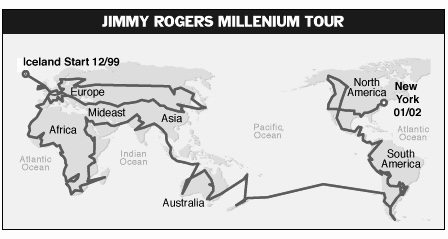
 THE CHAOS THEORY